How MLRS Built the Foundation
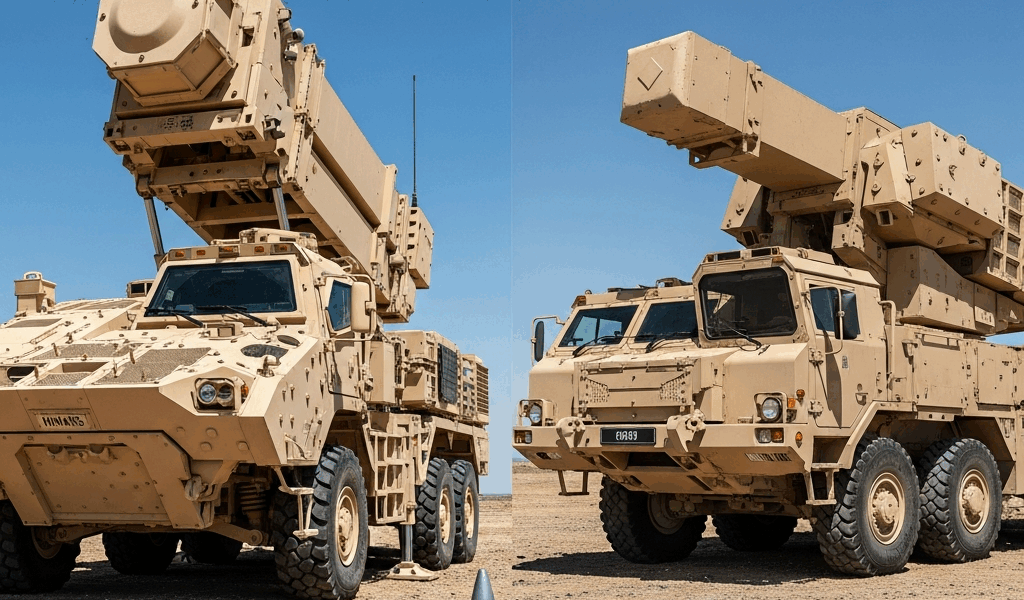
Introduced in 1983, the MLRS arrived as a tracked platform mounted on a chassis similar to the M2 Bradley fighting vehicle. It carried twelve 227mm rockets in a rotating launch pod, could fire all twelve in under a minute, and operated at ranges up to 30 kilometers depending on the rocket variant.
That was genuinely revolutionary. Before MLRS, delivering that volume of fire at that distance meant coordinating multiple traditional artillery pieces across difficult terrain — a logistical nightmare. With MLRS, a single crew of three could operate independently, reload relatively quickly, and relocate before return fire found them. NATO adopted it immediately across Germany, the UK, France, and the US. By the 1990s, it became the gold standard for deep fire support.
But revolutionary doesn’t mean permanent. The tracked platform, while stable and capable in soft ground, came with real constraints. We’re talking about a 42-ton vehicle requiring specialized transport, consuming fuel at rates that logistics officers genuinely hated, and taking hours to relocate between fire positions.
HIMARS Redesigned Everything About Mobility
The High Mobility Artillery Rocket System—HIMARS—entered development in the 1990s with one core insight: what if we built this on a truck instead?
Instead of the heavy tracked chassis, HIMARS uses a standard Palletized Load System truck (the FMTV platform that any competent motor pool recognizes). The difference in operational tempo is staggering. A MLRS unit repositioning between fire missions could take 4-6 hours to pack up, move 30 kilometers, and resume operations. HIMARS accomplishes the same transition in roughly 45 minutes. That speed matters in contested environments because counter-battery radar works faster every year — the window to escape shrinks constantly.
The truck platform also meant something nobody talks about enough: HIMARS could deploy to places tracked vehicles couldn’t reach. Desert operations in Iraq taught American planners that soft ground isn’t the only terrain that matters. Urban sprawl, bridge weight limitations, and logistics hub proximity matter more in modern warfare. A FMTV can use existing roads that would shred a 42-ton tracked vehicle.
Weight reduction came with sacrifice, though. Probably should have opened with this section, honestly. The tracked MLRS felt more stable at high angles and in truly rough terrain. HIMARS compensates through superior suspension and engineering, but the physics aren’t negotiable. Crews noticed the difference in rocky mountainous regions — which is why certain nations stuck with tracked systems longer.
Pushed by real-world need for speed, the US Army certified HIMARS for 88-km/h cross-country speeds. An MLRS unit pushing that hard would start shaking itself apart. This design philosophy shaped everything downstream. Faster missions. Lighter logistical footprint. Smaller deployment packages.
Firepower Range and Accuracy Then and Now
Original M270 MLRS fired M77 rockets with a maximum range of roughly 32 kilometers. Accuracy was measured in hundreds of meters — a circular error probable (CEP) of around 250-300 meters per rocket. Serviceable for area targets. Concerning for precision work.
HIMARS inherited the same basic 227mm rocket platforms but gained the ability to fire ATACMS (Army Tactical Missile System) variants with ranges exceeding 165 kilometers for later versions. The original ATACMS-A couldn’t match that distance, but the point stands: range tripled at minimum. More importantly? The GMLRS (Guided Multiple Launch Rocket System) variant uses GPS/inertial guidance with CEP values below 10 meters at extended range. That’s not area bombardment anymore. That’s precision strike.
The precision gap created a strategic consequence. MLRS required saturation tactics — fire enough rockets that statistical spread ensured impact on target. HIMARS requires accurate targeting data but can accomplish the same damage with single-digit rocket counts. Ukraine’s 2022 experience illustrated this perfectly. HIMARS strikes on supply depots and ammunition caches achieved results with four to six rockets that would have needed forty with legacy systems.
Older MLRS units received modernization packages adding GPS capability and improved fire control computers, but the underlying rocket platform’s accuracy remained fundamentally limited by ballistics physics. You can’t retrofit precision into an unguided rocket the way you can build it in from the start.
The range evolution also enabled operational concepts that MLRS couldn’t support. Counter-fire doctrine shifted from reactive to proactive — responding after getting hit versus striking enemy artillery before launch. HIMARS range meant you could strike targets at the theoretical maximum effective range of the enemy system. Asymmetric advantage, essentially.
Cost Per Mission and Logistics
Here’s where the comparison gets genuinely interesting — and less frequently discussed. MLRS crew of three operated the system, but you also needed dedicated maintenance personnel. That 42-ton vehicle demanded heavy recovery assets when something broke. A HIMARS crew? Two soldiers. Operator and driver. Sometimes one soldier could execute the firing sequence if absolutely necessary, which MLRS simply couldn’t achieve.
Fuel consumption tells part of the story. The MLRS tracked platform burned roughly 35 gallons per hour during road movement. HIMARS on the same terrain: approximately 18 gallons per hour. Over a month of sustained operations with repeated relocations, that difference compounds into substantial logistics requirement reductions. Supply line vulnerability dropped accordingly.
The maintenance burden shifted too. MLRS tracks required constant attention — tensioning, inspection, replacement intervals that logistics officers tracked obsessively. Trucks have tires and standard automotive components that most military bases could support with existing infrastructure. Specialized MLRS parts meant specialized supply chains. HIMARS could sometimes improvise with commercial-grade equivalents.
Ammunition isn’t cheaper per round — a GMLRS rocket costs roughly $68,000 to $100,000 depending on guidance package. That’s expensive. But total cost per mission dropped because you needed fewer rockets to achieve the same effect. The math works in HIMARS’ favor by substantial margins: 150 percent fewer rounds to destroy the same target means 150 percent lower ammunition consumption for equivalent outcomes.
When Each System Still Gets Used
The story doesn’t end with HIMARS winning completely. Poland, Germany, and several NATO nations still operate MLRS platforms because procurement budgets don’t allow wholesale replacement overnight. Sweden maintained MLRS capability until very recently — transitioning to HIMARS but keeping the older system in service for years afterward.
Russia never adopted HIMARS (obviously). They developed parallel systems like the Smerch and Tornado-G with similar truck platforms but different rocket designs. China built their own truck-based systems, suggesting the platform architecture itself matters more than the specific American implementation.
HIMARS dominates NATO doctrine for a simple reason: it aligns with modern operational tempo requirements. Forces expect to move frequently, strike with precision, and minimize logistics footprint. MLRS was designed when armies still anticipated longer engagement lines and had less concern about counter-battery radar. That doctrinal evolution drove hardware evolution.
But MLRS excels where you need overwhelming volume at moderate range with absolutely bulletproof reliability. Certain partner nations without extensive logistics infrastructure still prefer MLRS because the simpler guidance systems require less technical support infrastructure. Tracked platforms handle truly terrible roads better — relevant in certain regions more than others.
The Ukraine conflict revealed something interesting: HIMARS became psychologically dominant. Not always because it performed better — sometimes because its speed and precision created disproportionate impact narratively. MLRS operations continued everywhere. Media coverage concentrated on HIMARS. The system that evolved to meet modern requirements proved itself in real-world conditions that MLRS designers never anticipated.
When you actually compare them, HIMARS dominates because it solved problems MLRS created. Slower repositioning? Fixed. Logistics-heavy? Simplified. Imprecise fire? Solved through guided munitions. The comparison itself is evolutionary rather than revolutionary — HIMARS represents the logical progression when military doctrine demands speed and precision simultaneously.

Stay in the loop
Get the latest military vehicles vault updates delivered to your inbox.