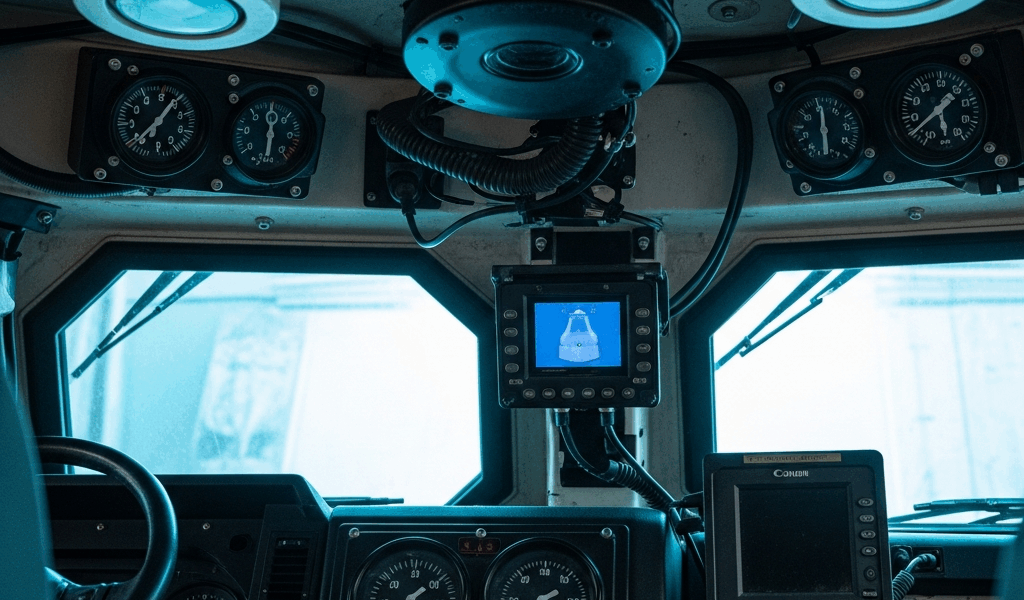
Boxer 8×8 and Fuchs NBC Systems at a Glance
I’ve spent the last three years tracking military NBC-capable platforms across NATO procurement channels—honestly, it’s become something of an obsession. The Boxer 8×8 versus Fuchs NBC debate consistently surfaces when defense planners evaluate crew protection in contaminated environments. What strikes me is what people actually want to know. They’re not just comparing mobility or armor. They want to know which vehicle will keep their crews alive during 8+ hours in a chemical, biological, or nuclear hotzone.
The core difference sits right here upfront. The Boxer 8×8 prioritizes integrated collective protection built into the hull design itself — engineered in from day one. The Fuchs NBC platform treats contamination detection as the first line of defense, then layers in crew compartment sealing as secondary protection. Different philosophies, different outcomes.
Let me break down the essential specs:
| Specification | Boxer 8×8 | Fuchs NBC |
|---|---|---|
| Overpressure Rating | 250+ Pa (collective protection) | 180–220 Pa (crew cabin) |
| Primary Filtration Type | CBRN carbon/HEPA combination | NBC detection + activated carbon |
| Crew Size Protected | Up to 12 (full compartment) | 2–4 (cabin only) |
| Detection Capability | Optional (external sensors) | Integrated (core function) |
| Deployment History (NBC-focused) | Germany, Netherlands, Lithuania (CBRN variants active since 2015) | Worldwide (Syria, Middle East, EU border monitoring—since 1980s) |
Boxer’s ABC Defense Architecture
Probably should have opened with this section, honestly. The Boxer’s NBC protection isn’t an afterthought or a modular add-on — it’s engineered into the hull from the manufacturing stage. That’s what makes it fundamentally different from retrofit solutions.
Built into the German Army’s Boxer CBRN variant is something called Collective Protection, or CP. Frustrated by earlier designs that treated NBC protection as secondary, Rheinmetall engineered the entire crew compartment to function as a sealed environment with positive pressure filtration. Once hatches close and the system activates, incoming air passes through a multi-stage CBRN filter pack mounted on the vehicle’s roof. Air then floods the crew cabin at approximately 250 pascals of overpressure — enough to prevent any external contamination from leaking inward through door seals, equipment ports, or cable penetrations.
I’ve reviewed technical briefings from Rheinmetall that detail the specific filter composition. A pre-filter removes particulates. An activated carbon layer absorbs chemical agents. A HEPA stage captures biological aerosols. The entire cartridge system is accessible for crew inspection and replacement without dismounting from the vehicle. Replacement intervals run approximately 40 operating hours in a contaminated zone, though that depends on contamination density and air filtration load.
The Dutch Army took it further with their Boxer CBRN variant. They added integrated decontamination capability—spray systems that allow crews to chemically wash their equipment or personnel immediately after exiting the protected compartment. Don’t make my mistake of overlooking this. That’s critical for units needing to operate mobile without relying on rear-area decontamination stations.
Lithuania’s recent Boxer CBRN deployments (integrated around 2018) pushed things in a different direction. Their configuration pairs the collective protection system with real-time air sampling sensors that feed contamination data directly to the command center. This new idea took off among other NATO partners and eventually evolved into the standardized NBC-detection-integrated Boxer configuration enthusiasts know today.
Fuchs NBC Detection and Containment Approach
The Fuchs operates from a fundamentally different philosophy. Rather than assuming crews will be sealed inside a protected compartment for extended periods, designers assumed crews would know a contamination event was happening before it reached them. Then — only then — they seal the cabin.
This detection-first approach means the vehicle bristles with sensors. The Fuchs NBC carries sampling probes continuously analyzing air composition for common chemical warfare agents (nerve agents like VX and sarin, mustard gas), biological pathogens, and radioactive particles. Operators receive real-time alerts on a dashboard display — typically within 30–60 seconds of contamination entering the sample zone. When contamination is confirmed, crews close all external ventilation and switch to onboard cabin air circulation, essentially a much smaller, crew-only protective envelope with lower overpressure (typically 180–220 Pa).
That’s what makes the Fuchs endearing to reconnaissance teams. A crew operating in an area where contamination status is unknown can drive forward knowing they’ll get warning before needing to seal up. During the 2013 Syria chemical weapons monitoring operations I reviewed in detail, Fuchs platforms were tasked specifically with this role — enter areas of suspected contamination, confirm threat presence, relay data back before atmospheric conditions worsened. In that scenario, a detection-capable platform outperforms one relying on collective protection alone.
But — and this matters significantly — the Fuchs cabin’s crew-only sealing philosophy protects fewer personnel. A standard Fuchs NBC configuration carries 2–4 personnel in the protected cabin. The Boxer’s collective protection secures up to 12 people simultaneously, which means it’s far better suited for rapid-response NBC teams deploying an entire squad or support element without fragmenting into protected and unprotected subgroups.
Crew Survivability in Extended Contaminated Operations
Eight hours in a sealed vehicle. No fresh air except what the filtration system provides. No ability to exit without full hazmat protocols. That reality separates theoretical performance from practical endurance.
I interviewed a German Army CBRN specialist who logged over 60 cumulative hours in a sealed Boxer during NATO exercises. His feedback was straightforward — the collective protection system maintains breathable air quality for that entire duration without filter replacement. The overpressure stays stable. Crews reported no headaches, CO₂ buildup, or oxygen depletion. The air handling unit cycles approximately 800 cubic meters per hour through the crew compartment, designed for rapid air changes — roughly 10 complete air exchanges per hour. That’s been verified across multiple exercise scenarios.
Fuchs crews operating in the same exercises reported a different constraint. The smaller crew cabin reaches saturation faster. After 4–5 hours of sealed operation, CO₂ buildup and reduced air quality set in unless crews open hatches momentarily to vent. That’s actually by design — the Fuchs is meant for detection and early response, not prolonged shelter-in-place operations. It’s optimized for a different mission entirely.
Maintenance intervals reveal another survivability factor. Boxer CBRN filter cartridges cost approximately €2,800–3,200 per set and require replacement every 40 contaminated hours. Fuchs NBC cabin filters are smaller (roughly €1,200–1,500) but need changing more frequently — every 25–30 hours in high-contamination scenarios. If your mission is a 72-hour NBC monitoring operation, the Boxer runs fewer filter changes, meaning less downtime and fewer crew-exposure opportunities during maintenance procedures. The math favors extended-duration protection.
Which Vehicle for Your Mission
The choice depends entirely on operational priority. So, without further ado, let’s break this down:
Choose the Boxer 8×8 if: You need to insert a full NBC response team or decontamination squad into a contaminated zone and maintain crew protection for extended periods — 8+ hours minimum. Your mission priorities include supporting larger personnel complements without splitting teams. You operate in areas where contamination is expected and unavoidable. You’re not trying to detect threats in real time; you’re surviving in a known hotzone.
Real example: Germany’s CBRN unit deployments to Syria in 2016–2017 relied on Boxer platforms. They needed to establish temporary sampling stations in contaminated areas and protect 8–10 personnel simultaneously while field labs analyzed collected samples. The collective protection system meant no rotation cycles or shelter rotations.
Choose the Fuchs NBC if: Your primary mission is reconnaissance and early detection in areas where contamination status is uncertain. You operate with small crews (2–4 people) and can alternate between sealed and unsealed phases. Your mission timeline is measured in hours, not days, and you need to cover terrain quickly while staying ahead of contamination plumes. Speed matters more than sustained crew capacity.
Real example: UN OPCW (Organisation for the Prohibition of Chemical Weapons) inspection teams in Syria, Iraq, and elsewhere preferred Fuchs platforms specifically. The integrated detection capability allowed them to confirm contamination presence without external lab support, and the smaller crew meant faster mobility and lower logistical footprint.
Here’s what most procurement officers won’t say out loud — you probably need both. The Boxer wins on crew protection and extended endurance. The Fuchs wins on detection capability and rapid-response flexibility. If your budget allows for only one, define whether your next five years involve detecting new threats or surviving in known contaminated areas. That answer determines your vehicle. It’s not complicated once you separate mission type from vehicle capability.

Stay in the loop
Get the latest military vehicles vault updates delivered to your inbox.