The Original M2 Bradley Design and Its Armor Problem
I’ve spent more time than I care to admit reading declassified Army armor specifications, and honestly, the Bradley fighting vehicle armor upgrades reveal something fascinating: the original M2 Bradley wasn’t built as a tank killer — it was built to get infantry somewhere fast while protecting them from basically everything except direct anti-tank fire.
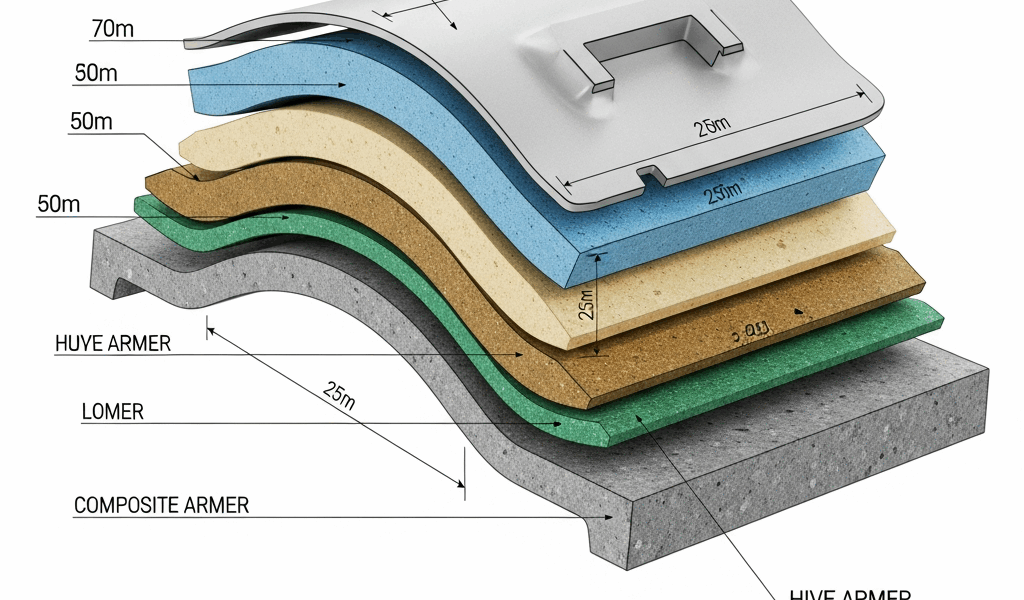
The baseline M2 hull, adopted in 1981, used 6061-T6 aluminum alloy. This choice wasn’t cheap engineering, by the way. Aluminum offered weight savings (the Bradley needed to stay under 25 tons to achieve its 40+ mph mobility), and it provided decent protection against fragmentation and small-arms fire out to 7.62mm at close range. The designers understood their threat environment: Soviet-era air defense guns, artillery shrapnel, and infantry-carried weapons like the RPG-7. That was clear-eyed design.
But here’s what nobody talks about much: that aluminum hull stopped basically nothing when it came to shaped-charge warheads. A HEAT round — High Explosive Anti-Tank — punches through armor by creating a hypervelocity jet of molten copper. Thickness matters less than composition. The original Bradley’s aluminum hull provided roughly 40mm of steel-equivalent protection on the side, maybe 60mm on the front. Against first-generation RPGs common in the 1980s? That was marginal. Against anything more modern, it was inadequate.
This wasn’t a design failure. It was a deliberate trade-off. The Bradley was supposed to support infantry, not duel with tanks. But by 1990, as armor doctrine shifted and threats multiplied, the Army realized the platform needed evolutionary upgrades to survive the threats it actually faced. That’s when things got complicated.
ERA Tiles and Composite Add-Ons Through the 1990s
Explosive Reactive Armor started appearing on Bradleys during Operation Desert Shield in 1990. Bolted on, not integrated into the hull — that’s the key detail. Steel mounting boxes held individual ceramic-lined explosive tiles, typically 100mm x 100mm x 40mm per tile. When a shaped-charge warhead detonated against one of these boxes, the internal explosive would fire, disrupting the molten jet and spreading the impact energy over a wider area.
The first ERA packages went on the turret and hull sides where threat axes made the most sense. The front slope got coverage. The rear? Not so much — Bradley commanders accepted that fighting retreats weren’t the primary scenario. A fully upgraded M2A2 ODS variant (the Gulf War upgrade) carried roughly 200+ kg of ERA tiles, adding maybe 2–3 tons to the total weight depending on configuration.
Here’s the honest part that manufacturers don’t emphasize: ERA works once. After detonation, you’ve lost that protection. Combat losses in Iraq showed Bradleys hit multiple times by IEDs or RPGs where early ERA tiles had already been sacrificed, leaving the aluminum hull exposed to secondary hits. That’s a painful reality nobody wanted to acknowledge publicly.
Beyond ERA, the 1990s saw composite panel additions. The Army tested various materials — boron carbide ceramics, laminated steel/elastomer composites. Some were bolted externally. Others, in later variants like the M2A3, were incorporated into the turret casting itself. These composite additions provided steel-equivalent protection roughly 15–20% better than ERA alone, but they were heavier, cost more to produce, and required different maintenance protocols entirely.
The M2A2 ODS package weighed approximately 32.3 tons fully loaded. By the time the M2A3 arrived in the late 1990s with integrated composites and upgraded fire-control systems, dry weight had crept to 33.8 tons. That extra 1.5 tons doesn’t sound like much — until you realize it meant 8–10% reduction in combat range and higher fuel consumption in desert operations. The numbers add up fast.
SLEP and Post-2000s Modern Upgrades
Probably should have opened with this section, honestly — because the Service Life Extension Program changes that began rolling out after 2006 fundamentally altered how the Bradley protected its crew, not just in armor thickness but in survivability systems.
SLEP wasn’t primarily about adding thicker armor. Instead, the Army focused on composite material replacement and active protection enhancements. The turret underwent significant restructuring. Older cast steel turrets got supplemented with modular composite armor packages that could be swapped for maintenance or upgraded as threats evolved. These composites — layered ceramic and steel with proprietary elastomer matrices that I’ve never seen fully detailed in unclassified specs — provided better protection against modern shaped-charge threats than older ERA tiles could manage.
Fire suppression system upgrades came with SLEP variants too. The M2A3 had basic halon systems. SLEP-equipped M2A4 variants introduced more sophisticated nitrogen-based suppression with automatic activation. Survivability isn’t just about stopping rounds — it’s about crew recovery when something gets through. That system added roughly 150 kg and cost approximately $400,000 per vehicle in retrofit labor and materials.
The powerplant received attention as well. Early Bradleys used the Cummins VTA-903T turbocharged diesel, rated at 600 horsepower. SLEP upgrades included engine management system overhauls and turbocharger improvements that maintained power while reducing fuel consumption by 10–12%. On a 350-mile operational range, that matters. A lot.
Weight crept again. A SLEP-modified M2A4 sits around 34.2 tons, nearly 500 kg heavier than the original 1981 baseline. The suspension — torsion bars, track assemblies — absorbed this incrementally. The Army accepted a roughly 2–3 mph reduction in maximum road speed to maintain structural reliability. Fair trade, considering the circumstances.
Real Cost and Trade-Off Reality
Each armor upgrade reduced fuel range. The math is straightforward: weight increases roughly 3–5% per major upgrade cycle, which translates directly to consumption increases in the same range. A 1981 M2 could manage 300+ miles on a full 225-liter fuel load. A 2010s-era SLEP variant drops to roughly 250–270 miles under identical conditions.
This matters in desert operations, where forward fuel caches and supply lines determine tactical reach. Iraq and Afghanistan operations revealed this constraint repeatedly — Bradley squadrons operating beyond 150 miles from main supply routes faced fuel logistics that absorbed significant combat power just moving fuel trucks around.
Maintenance complexity exploded, honestly. Early Bradleys had straightforward armor. You hit them, you occasionally welded something back together and moved on. Modern composites require specific repair procedures. A composite turret panel damaged in combat can’t be field-welded back together. It requires depot-level replacement. A single M2A4 composite turret costs approximately $1.8 million to replace.
The Army accepted these trade-offs because the threat environment demanded it. By 1995, Iraq and potential peer competitors fielded tandem-charge warheads — two shaped charges detonating in sequence to defeat reactive armor and penetrate behind it. A single-stage ERA tile stopped the first charge; the second would penetrate right through. Only composite armor with depth and sophistication handled tandem threats reliably.
Thermal signature increased too, though this gets less discussion. More electronics, upgraded fire-control systems, and engine management improvements made modern Bradleys slightly warmer to infrared sensors. Marginal, maybe 5–8% increase in detectability, but real.
Bradley Armor vs Modern Threats Today
Let’s be direct: by 2024, Bradley armor upgrades have been outpaced by threat evolution. Modern anti-armor weapons — the Javelin, NLAW, Kornet, and current-generation RPGs — defeat Bradley protection through sheer warhead power and design sophistication. A Javelin’s thermobaric charge, detonating above the vehicle to rain molten fragments downward, bypasses the side armor entirely.
Ukraine combat footage confirms what military analysts suspected: Bradleys are taking hits that penetrate all the way through to crew compartments. The vehicle absorbs impacts and survives, sometimes, but crew survivability isn’t guaranteed. One documented hit near Bakhmut showed a composite-armored M2A4 penetrated by what appeared to be a Kornet warhead; the vehicle kept moving but the crew was lost.
Why does the Bradley armor upgrade story still matter then? Because understanding the incremental progression explains military decision-making. Each upgrade represented the best available solution against known and projected threats at that moment. The 1990s ERA tiles stopped RPG-7s and older tandem warheads. The 2000s composites handled advanced shaped charges. Neither solved the modern problem of top-attack and tandem-charge threats that arrive on ballistic arcs.
Current variants — the M2A4 and experimental M2A5 — incorporate survivability features beyond armor: improved electronic warfare, countermeasure dispensers, and network-centric awareness that lets crews detect and evade threats rather than just absorb them. That’s the real evolution: recognizing that armor alone can’t solve survivability in peer-conflict scenarios.
The Bradley will remain relevant as long as militaries need mobile infantry support, but its relevance depends less on armor thickness and more on speed, firepower integration, and the broader combined-arms context it operates within. The armor upgrades explained here — from aluminum baseline through ERA and composite enhancements — tell the story of a platform trying to adapt to threats that ultimately outpaced what bolting things onto a 1981 hull design could ever achieve. Don’t make my mistake of assuming armor alone determines survival.

Stay in the loop
Get the latest military vehicles vault updates delivered to your inbox.