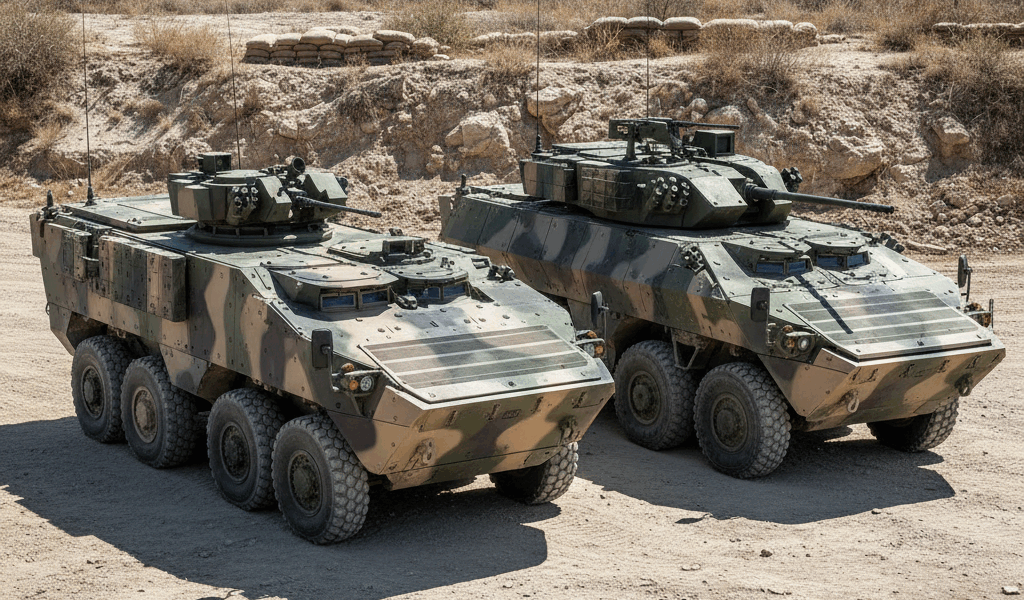
Military vehicle comparisons have become harder to navigate with all the technical jargon flying around. As someone who spent time around both the Marine Corps LAV-25 and the Army’s Stryker, I figured out the ins and outs of what actually separates these wheeled armored vehicles. Today, I will share it all with you.
This article includes affiliate links. We may earn a commission at no extra cost to you.
The Quick Answer
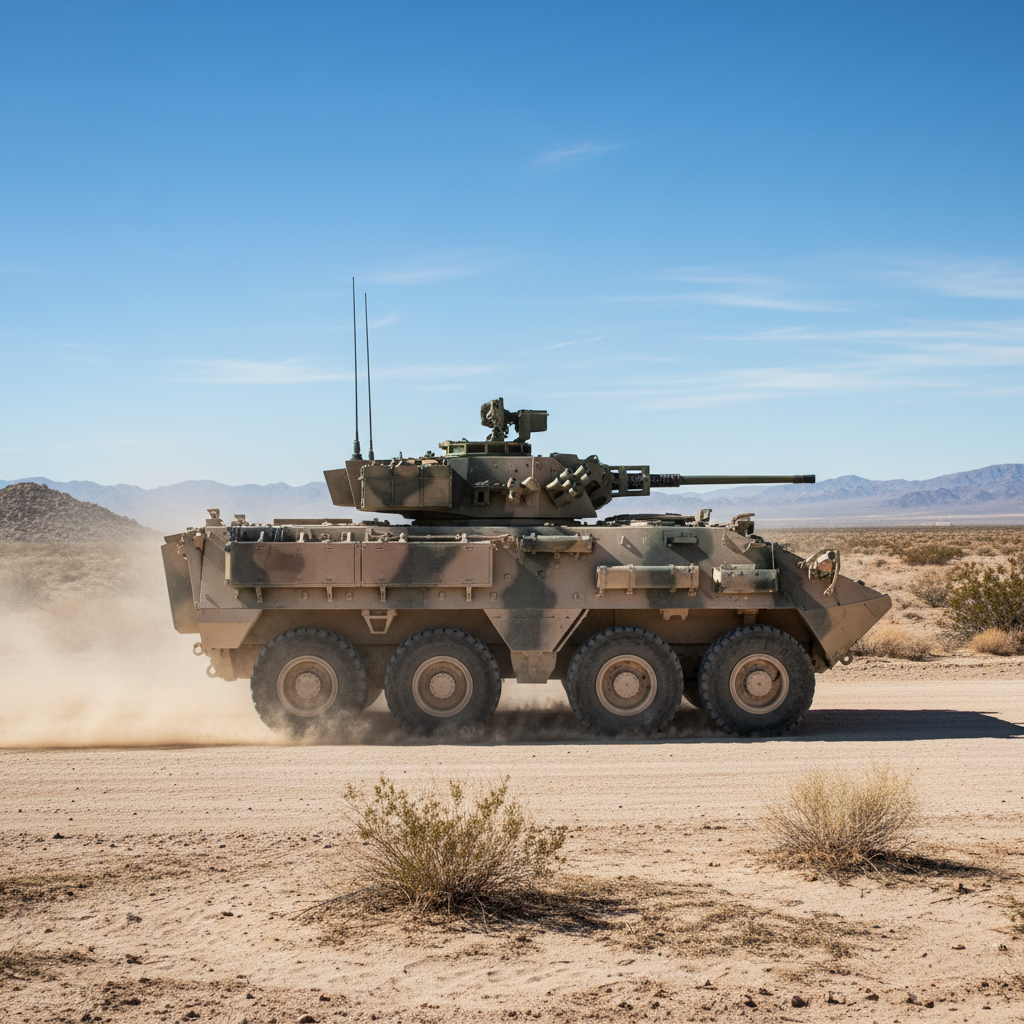
The LAV-25 is a 12.8-ton amphibious reconnaissance vehicle armed with a 25mm autocannon, used primarily by the Marines. The Stryker is a 19-ton non-amphibious infantry carrier with lighter armament (in most variants), used by the Army. Both are eight-wheeled armored vehicles derived from the same Canadian design, but they’ve evolved for different missions.
Honestly, the biggest difference isn’t in the specs – it’s in who uses them and why.
The Family Tree
Here’s something that trips people up: these vehicles are related. The Stryker is based on the LAV III, which was itself based on the LAV-25 family. Same Canadian manufacturer (General Dynamics Land Systems-Canada), same basic eight-wheel layout, but the Stryker came later and grew bigger in the process.
Think of them like cousins rather than competitors. They share DNA but went different directions based on what their respective services needed.
Size and Weight: Bigger Isn’t Always Better
The LAV-25 weighs around 12.8 tons. The Stryker tips the scales at approximately 19 tons.
That 6-ton difference matters more than you’d think. The lighter LAV-25 is more nimble and can go places the heavier Stryker can’t. Air transport becomes easier too – the LAV-25 fits in C-130s, C-141s, C-5s, and even CH-53E helicopters without breaking a sweat.
The Stryker is C-130 transportable, but that extra weight means you’re working closer to limits. The Army specifically designed the Stryker around C-130 transportability requirements, so they made it work, but physics is physics.
On the flip side, that extra Stryker weight comes from somewhere – mainly better armor protection and systems. We’ll get to that.
Armor Protection: Light vs Enhanced
The LAV-25’s armor is honest about what it does. You’re looking at 4.71mm to 9.71mm high-hardness steel designed to stop 7.62x39mm rounds (think AK-47 fire). Small arms protection, basically. It’s not pretending to be a tank.
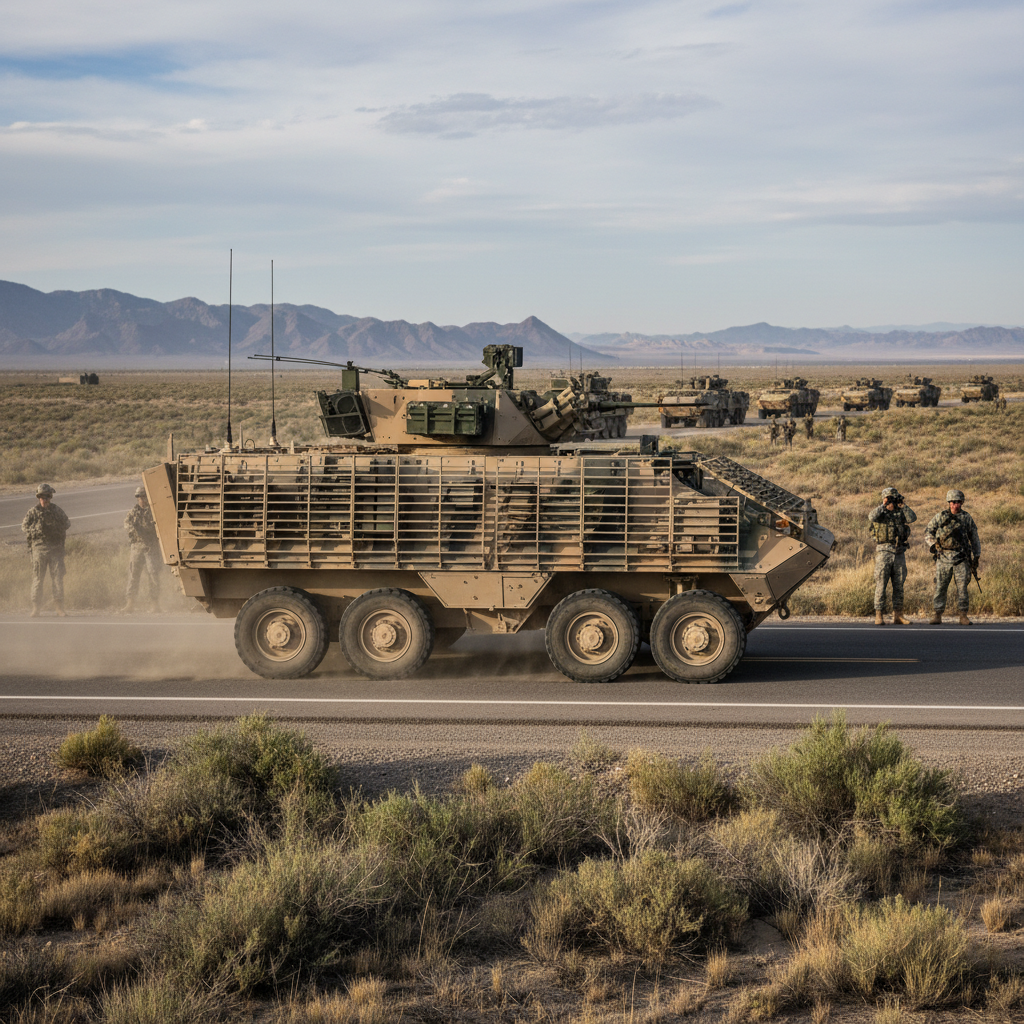
The Stryker brings heavier armor. The base protection stops 14.5mm projectiles and provides 152mm artillery airburst protection. That’s a significant step up. You can also add the slat armor cage (looks like a bed frame bolted to the vehicle) for RPG protection, though soldiers had mixed feelings about the added bulk.
Recent Stryker upgrades include the Double V-Hull (DVH) configuration with blast-attenuating seats, better suspension, and increased armor. These upgrades came from hard lessons learned in Iraq and Afghanistan.
The LAV-25 hasn’t seen the same level of armor upgrades. The Marines accepted the risk in exchange for maintaining amphibious capability and lower weight. Different priorities.
Firepower: Where Things Get Interesting
The standard LAV-25 mounts a turret with the 25mm M242 Bushmaster autocannon, plus two 7.62mm M240 machine guns and smoke grenade launchers. That’s legit firepower for a reconnaissance vehicle. You’re carrying 630 rounds for the autocannon, with 210 ready to fire.
The base Stryker Infantry Carrier Vehicle? Just a remote weapon station with a .50 cal machine gun or 40mm grenade launcher. Way less firepower than the LAV-25.
But here’s where it gets complicated: the Stryker family includes multiple variants. The Anti-Tank Guided Missile variant (M1134) carries TOW missiles. The Mobile Gun System variant mounted a 105mm gun (though that version had issues and got retired). The newer Dragoon variant (M1296) got a 30mm autocannon in an unmanned turret – finally matching or exceeding LAV-25 firepower.
So saying “the Stryker has lighter armament” is only true for certain variants. The LAV-25 is more consistently armed because it has a single primary mission.
Amphibious Capability: The Marine Difference
This is the capability that defines the vehicles’ different roles.
The LAV-25 is amphibious. Give the crew three minutes to prep (raising the trim vane, switching on bilge pumps, checking seals), and it’ll swim. Two small propellers near the rear wheels push it through water at about 6 mph. It can ford streams, rivers, and inland waterways without engineering support.
The Stryker? Nope. Not amphibious at all. It’ll ford shallow water crossings, but it’s not swimming anywhere.
Why the difference? The Marine Corps operates from ships and conducts amphibious assaults. The LAV-25 needs to hit the beach and keep moving inland. The Army’s Stryker brigades deploy differently – they fly into secured airfields or drive in from land borders. Amphibious capability wasn’t worth the weight and complexity trade-offs for the Army’s mission set.
Speed and Mobility
Both vehicles max out around 100 km/h (62 mph) on roads. The LAV-25’s lighter weight gives it slightly better cross-country performance and a higher power-to-weight ratio.
Range? The LAV-25 can go about 410 miles. The Stryker manages around 312 miles (502 km). Both are adequate for their intended roles.
In practice, you rarely run either vehicle until the fuel tank hits empty. You refuel at tactical intervals based on mission requirements, not engineering limits.
Crew and Passengers
LAV-25: Three crew (commander, gunner, driver) plus four scouts with combat gear.
Stryker ICV: Two crew plus nine infantry soldiers.
The Stryker carries more dismounts because that’s its primary job – getting an infantry squad to the fight. The LAV-25 carries fewer scouts because it’s doing reconnaissance, not hauling full squads.
Different missions, different capacity requirements.
Operational Use: Where You See Them
The LAV-25 serves primarily with Marine Corps Light Armored Reconnaissance battalions. You’ll see them screening ahead of Marine forces, conducting security missions, and providing mobile firepower for combined arms operations. The amphibious capability makes them valuable for expeditionary operations where you’re working from naval assets.
Stryker brigades are Army infantry units built around the Stryker platform. They’re designed for rapid deployment and operations in urban and complex terrain. You saw them extensively in Iraq doing everything from convoy security to urban combat.
The LAV-25 has been around since 1983. It’s proven, reliable, and Marines know how to maintain them with duct tape and determination when parts are scarce (I’m kidding, mostly).
The Stryker entered service in the early 2000s. It’s newer, has more modern systems, but also went through growing pains during early combat deployments.
The Variants Story
LAV-25 comes in multiple versions within the LAV family: LAV-AT (anti-tank), LAV-C2 (command), LAV-L (logistics), LAV-M (mortar), LAV-R (recovery), LAV-AD (air defense, now retired). But when people say “LAV-25,” they’re usually talking about the baseline reconnaissance variant.
Stryker has ten official variants on the same chassis. This modularity was a deliberate design choice – one basic vehicle platform adapted for multiple roles. Infantry carrier, medical evacuation, mortar carrier, reconnaissance, engineering support, mobile gun system (retired), anti-tank, command, NBC recon, and the newer Dragoon infantry fighting vehicle.
The Stryker family’s modularity is both a strength (logistics commonality) and a weakness (some variants work better than others).
Maintenance and Support
The LAV-25 uses a 6V-53T Detroit diesel engine. Parts commonality across the LAV family helps with logistics, though some components are getting harder to source as the fleet ages.
Stryker uses a Caterpillar 3126 diesel engine (later models got upgraded to C7). Caterpillar engines are everywhere, which helps with parts availability and civilian contractor maintenance support.
Both vehicles use eight-wheel drive with run-flat tires and central tire inflation systems. You can lose multiple tires and keep moving – critical for combat operations.
Field maintenance is easier on the LAV-25 because it’s mechanically simpler. The Stryker has more electronics and computerized systems, which are great when they work but require specialized diagnostic equipment when they don’t.
Upgrade Paths
The LAV-25 hasn’t seen major upgrades in recent years. The Marine Corps has put money into other priorities, and the LAV fleet soldiers on with incremental improvements.
The Stryker has received continuous upgrades: DVH for IED protection, improved networking and communications, better armor packages, more powerful engines to handle the added weight, and the Dragoon variant to address the firepower gap.
The Army invested heavily in keeping Stryker relevant because Stryker brigades are a core part of their force structure. The Marines use LAVs in a more specialized role, so upgrade funding reflects that difference.
Which One’s Better?
Wrong question, honestly. They’re optimized for different things.
The LAV-25 is better if you need amphibious capability, lighter weight, better firepower in the baseline vehicle, and traditional Marine Corps expeditionary operations.
The Stryker is better if you need better armor protection, more modular configurations, higher passenger capacity, and networked digital systems for conventional Army operations.
Both excel at their intended missions. Both would struggle if you forced them into the other’s role.
The Bottom Line
The LAV-25 and Stryker share common ancestry but diverged based on service-specific requirements. The Marines needed an amphibious reconnaissance vehicle that could swim, shoot, and scout. The Army needed a rapidly deployable infantry carrier that could survive in high-threat environments.
Neither service got it wrong. They got what they needed for their missions.
If you’re comparing these vehicles for a school project or just curiosity, understand that military vehicle design involves trade-offs. Amphibious capability costs weight and complexity. Better armor costs mobility and transportability. More passengers mean less space for other systems.
The LAV-25 and Stryker made different trade-offs because the Marines and Army operate differently. That’s the real answer to “which is better” – it depends on whether you’re coming from the sea or flying into an airfield.
Sources:
– Wikipedia: LAV-25
– Oreate AI: LAV-25 vs Stryker Comparison
– Military.com: LAV-25 Light Armored Vehicle
– Wikipedia: Stryker
– Army Technology: Stryker Armoured Combat Vehicle Family

Stay in the loop
Get the latest military vehicles vault updates delivered to your inbox.