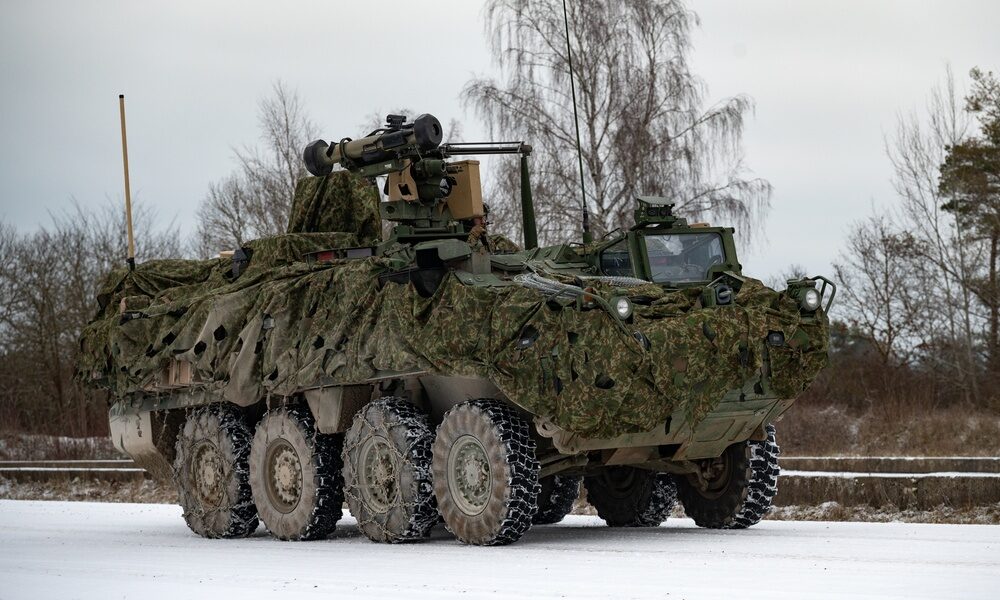
Stryker modernization has gotten complicated with all the variants and capability upgrades flying around Army transformation discussions. As someone who’s been following vehicle development and forward deployment decisions for years, I learned everything there is to know about why the Dragoon variant matters. Today, I will share it all with you.
The U.S. Army’s Stryker brigade combat teams are undergoing a significant transformation with the deployment of the Stryker Dragoon variant to Europe, marking a crucial enhancement in the service’s ability to counter near-peer threats on the continent. This isn’t just a minor upgrade—it fundamentally changes what Stryker units can do in a fight.
Understanding the Stryker Dragoon Upgrade
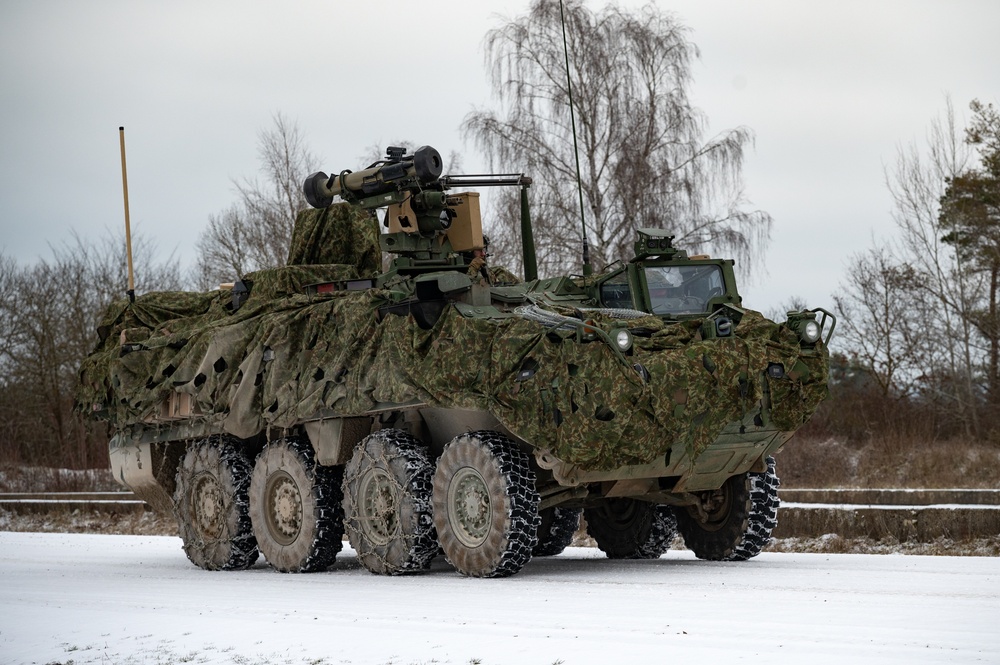
Probably should have led with this section, honestly. The Stryker Dragoon represents the most significant firepower enhancement to the Stryker platform since its introduction in the early 2000s. The vehicle mounts the 30mm XM813 Bushmaster cannon in a remote turret, replacing the standard .50 caliber M2 machine gun. That’s what makes this upgrade so important—Stryker units now have organic capability to engage light armored vehicles, infantry fighting positions, and low-flying aircraft without requiring direct support from tanks or dedicated anti-armor platforms.
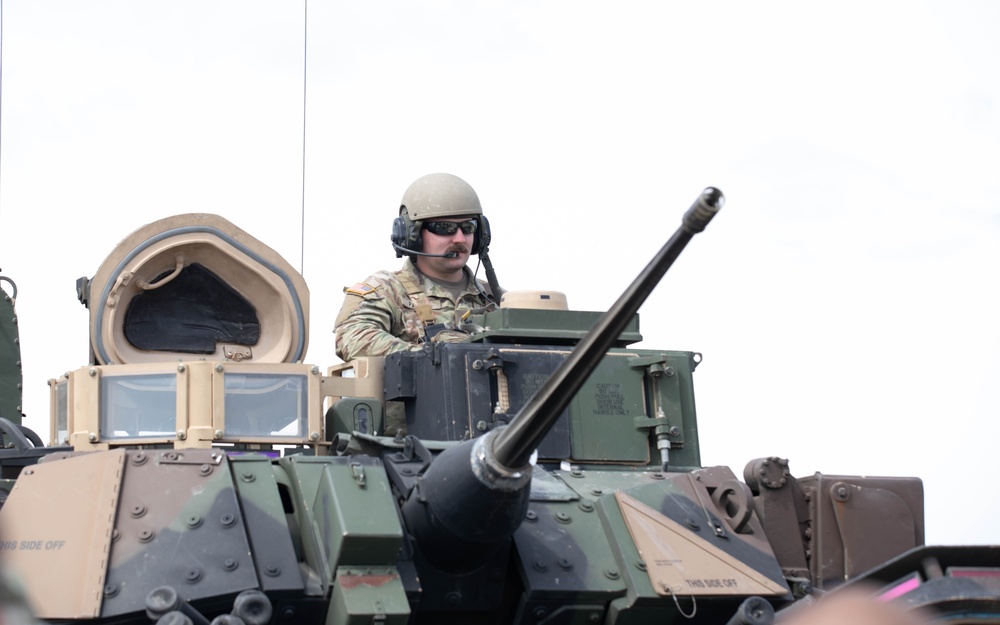
The 30mm cannon fires at a rate of 200 rounds per minute and can effectively engage targets at ranges exceeding 2,000 meters. The ammunition load includes armor-piercing and high-explosive dual-purpose rounds, giving crews flexibility against diverse threat sets they might encounter. The Remote Weapon Station allows the gunner to engage targets while remaining under armor protection—a critical advantage in contested environments where exposing yourself to return fire gets people killed.
Units Deploying to Europe
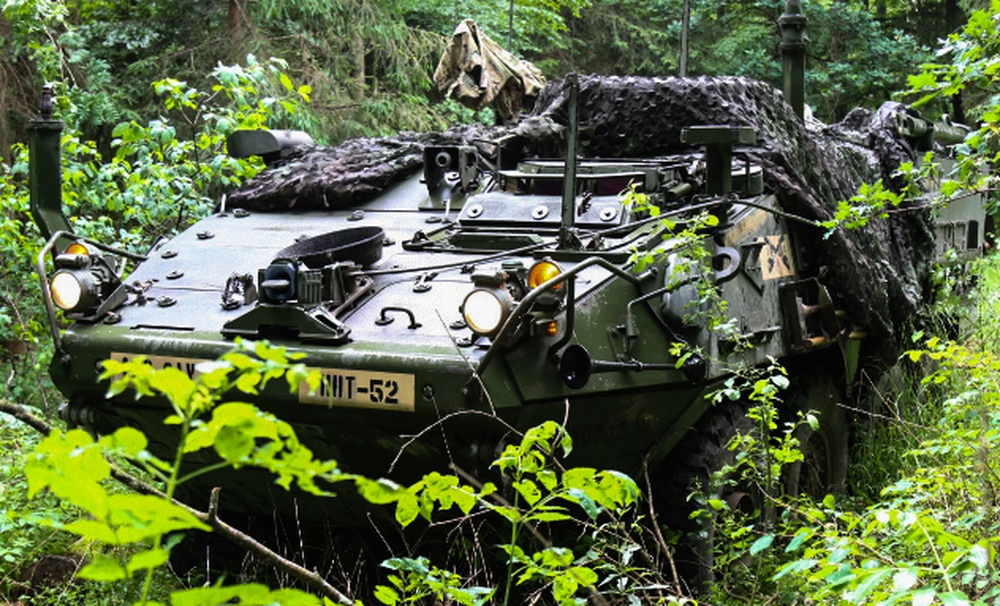
The 2nd Cavalry Regiment, based in Vilseck, Germany, became the first unit to receive Dragoon variants for permanent forward deployment. The regiment’s squadrons now operate a mix of standard Strykers and Dragoon variants, providing commanders with increased flexibility for combined arms operations. Additional rotational forces from the 2nd Stryker Brigade Combat Team, 2nd Infantry Division, stationed at Joint Base Lewis-McChord, Washington, have deployed with Dragoons for extended training missions across Poland, the Baltic states, and Romania.
These deployments support the European Deterrence Initiative, the U.S. effort to reassure NATO allies and demonstrate commitment to collective defense following Russia’s actions in Ukraine. The Dragoon’s enhanced lethality addresses a capability gap identified during early EDI rotations, where standard Stryker units lacked the firepower to effectively support allied formations operating heavier armored vehicles. That gap was obvious to anyone paying attention, and the Dragoon fills it.
Stryker vs Bradley: Different Roles, Complementary Capabilities
Military observers often compare the Stryker Dragoon to the M2 Bradley Infantry Fighting Vehicle, but the platforms serve distinctly different tactical purposes—and understanding that distinction matters. The Bradley, weighing approximately 30 tons, provides protected transport for infantry squads while offering substantial firepower through its 25mm chain gun and TOW anti-tank missile launcher. The Stryker Dragoon, at roughly 20 tons, prioritizes strategic and operational mobility over armor protection.
Stryker Brigade Combat Teams can deploy rapidly via C-17 transport aircraft, with three Strykers fitting in a single aircraft. Bradley-equipped Armored Brigade Combat Teams require significantly more lift capacity and typically deploy by ship. That’s what makes Stryker units so valuable for rapid response scenarios, while Bradleys excel in sustained, high-intensity combat where their heavier armor provides better crew protection against serious threats.
Strategic Importance of European Deployment
The Dragoon deployment addresses specific tactical challenges identified during NATO exercises that commanders couldn’t ignore. European terrain features extensive urban areas, forests, and restricted mobility corridors where adversary infantry and light armored vehicles could threaten Stryker formations. The 30mm cannon gives Dragoon crews the ability to suppress threats at extended ranges without dismounting infantry or waiting for supporting fires that might not arrive in time.
Allied military leaders have praised the capability upgrade. Polish, Lithuanian, and German officers participating in joint exercises noted that Dragoon-equipped formations integrate more effectively with their own mechanized infantry units, which typically operate vehicles with 20-40mm armament. This commonality simplifies combined arms planning and logistics coordination during multinational operations—no small thing when you’re trying to fight alongside forces that speak different languages.
The Future of Stryker Variants
The Dragoon represents one element of broader Stryker modernization efforts that are reshaping the entire brigade combat team concept. The Army has also fielded the Stryker M-SHORAD, which mounts Stinger missiles and a 30mm cannon to provide air defense for maneuvering units against the drone threats that have proven so deadly in recent conflicts. Development continues on electronic warfare and reconnaissance variants, ensuring Stryker brigades remain relevant against evolving threats.
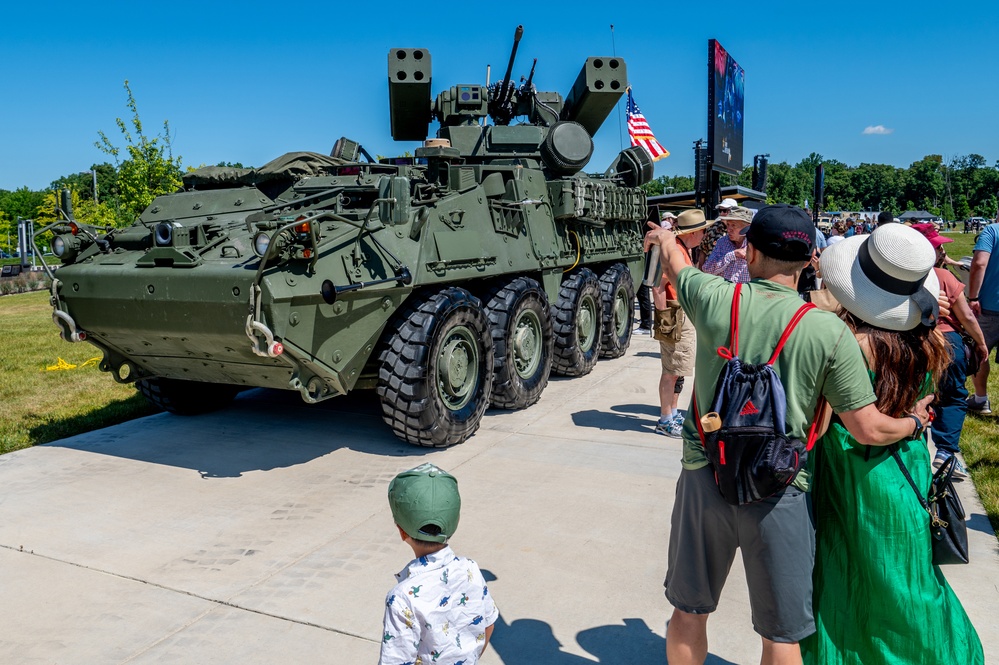
Program officials expect continued refinement of the Dragoon configuration based on operational feedback from European deployments. Soldiers have provided input on ammunition stowage, maintenance procedures, and crew ergonomics that will inform future production lots. The platform’s modular design allows relatively straightforward integration of improvements, ensuring deployed units benefit from lessons learned in the field rather than waiting years for the next major variant.
As NATO continues adapting its force posture to contemporary security challenges, the Stryker Dragoon exemplifies the type of capability modernization required to maintain credible deterrence across the alliance’s eastern flank. These aren’t just paper improvements—they’re changes that affect what commanders can actually do when the shooting starts.

Stay in the loop
Get the latest military vehicles vault updates delivered to your inbox.