MRAP protection has gotten complicated with all the variants, configurations, and threat levels flying around. As someone who tracked the MRAP program from its urgent beginnings through its massive deployment, I learned everything there is to know about these life-saving machines. Today, I will share it all with you.
MRAPs exist because soldiers were dying. That’s the blunt truth. These vehicles represent the military’s urgent answer to IEDs in Iraq and Afghanistan, and they fundamentally changed how we think about protecting troops in tactical vehicles.
The IED Crisis
Probably should have led with this section, honestly. By 2006, improvised explosive devices were the number one killer of American troops in Iraq. Standard Humvees — even the up-armored versions — couldn’t handle sophisticated IEDs. Insurgents escalated from artillery shells to massive deep-buried bombs, and our troops paid the price.
The Pentagon fast-tracked MRAP procurement in 2007. What followed was one of the largest and fastest vehicle buying sprees in military history. Within 18 months, thousands of MRAPs were in combat zones. When leadership is motivated by casualty reports, procurement moves fast.
Design Philosophy
Every MRAP shares the same core survival features. V-shaped hulls to deflect blast energy outward instead of up through the crew compartment. Raised crew positions to increase distance from explosions — physics says more distance equals less damage. Blast-attenuating seats that absorb shock so the crew doesn’t. Thick armor against fragments and small arms on top of everything else.
The numbers proved it worked. MRAP passengers were 7.5 times more likely to survive an IED blast compared to Humvee occupants. Seven and a half times. That statistic drove the entire program, despite costs exceeding a million dollars per vehicle and the fact that MRAPs handle like pregnant whales off-road.
Major MRAP Variants
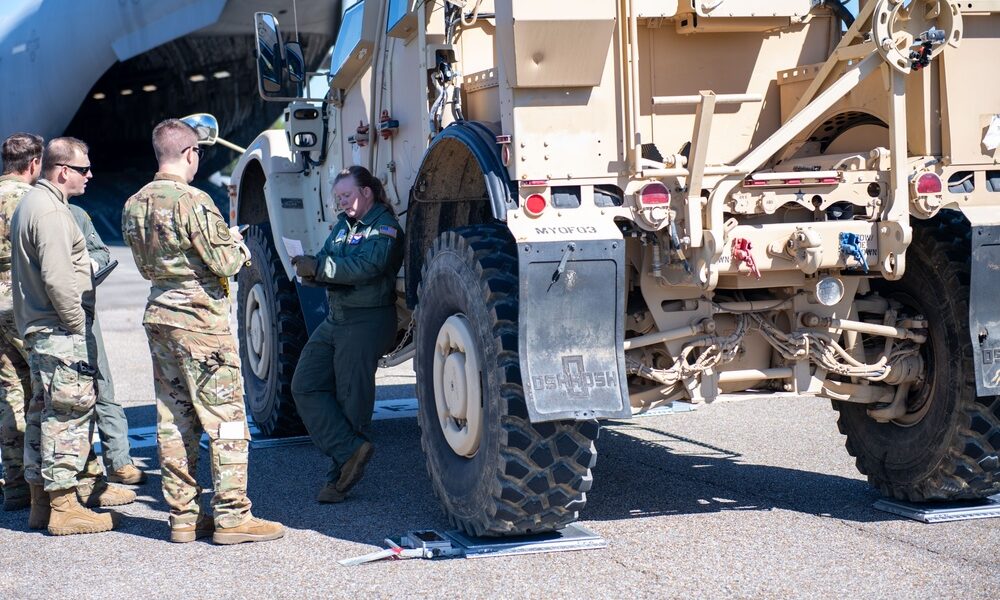
The Cougar from Force Protection (now General Dynamics) was one of the first deployed. Available in 4×4 and 6×6, Cougars handled route clearance and patrol missions. The MaxxPro from Navistar became the most numerous — over 9,000 built. That’s a lot of vehicles for what started as an emergency program.
The RG-31 and RG-33 drew on South African designs. South Africa has decades of mine-protection experience from their own conflicts, and that expertise showed. The Buffalo is the wild one — it has a 30-foot articulated arm for poking at suspicious objects from a safe distance. Bomb squad on wheels.
That’s what makes the M-ATV endearing to us vehicle watchers — it addressed the original MRAPs’ biggest weakness. The MRAP All-Terrain Vehicle combined full MRAP-level protection with actually decent off-road mobility, which the original flat-land MRAPs couldn’t manage in Afghanistan’s mountains.
Operational Impact
MRAPs transformed convoy operations. Routes that had been killing grounds became manageable. Troops gained confidence. The vehicles’ sheer intimidating presence served as its own deterrent.
But let’s be honest about the downsides. These things weigh over 40,000 pounds. They crushed roads and broke bridges. Fuel consumption was staggering. Their height made rollovers a constant worry. Despite all that, the lives saved made every dollar and every logistical headache worthwhile. That’s not an opinion — the casualty data backs it up.
Legacy and Current Status
With Iraq and Afghanistan winding down, the MRAP fleet shrank. Many went to allies. Some got donated to law enforcement, which stirred up controversy. Others sit in storage. But MRAPs remain in service for high-threat environments, and more importantly, the protection concepts they proved now influence every tactical vehicle design the military buys — including the JLTV. The MRAP program changed the rules permanently.

Stay in the loop
Get the latest military vehicles vault updates delivered to your inbox.