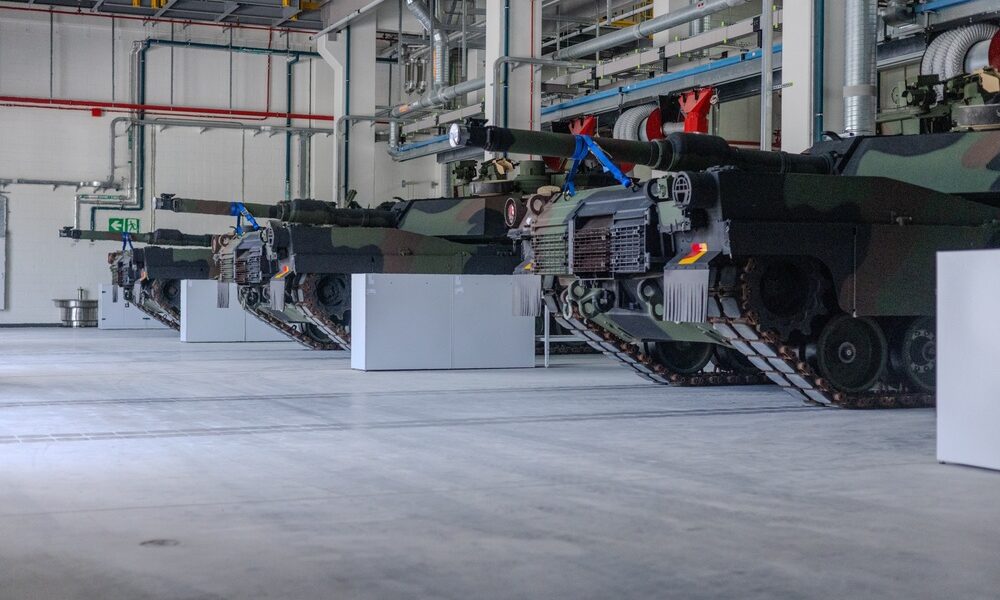
Comparing light armored vehicles has gotten complicated with all the different configurations and mission sets flying around military discussions. As someone who’s spent years tracking vehicle development and talking to the soldiers and Marines who actually use these platforms, I learned everything there is to know about what separates these three vehicle families. Today, I will share it all with you.
Light armored vehicles occupy a crucial middle ground between unprotected trucks and heavy tanks—and getting that balance right matters enormously. They provide infantry with protection and firepower while maintaining strategic mobility that heavy armor simply cannot match. The Stryker, LAV, and MRAP families represent fundamentally different approaches to this balance, and understanding those differences helps explain why we have all three.
LAV-25: The Pioneer
Probably should have led with this section, honestly. The Light Armored Vehicle-25 entered Marine Corps service in 1983, providing eight-wheeled armored mobility with a 25mm chain gun that could engage light vehicles and infantry positions effectively. The LAV can be transported by C-130 aircraft, swim across water obstacles, and maintain speeds over 60 mph on paved roads—that’s mobility that tracked vehicles can’t touch.
The LAV’s combination of firepower and mobility made it ideal for reconnaissance and security missions where speed matters more than heavy armor. Variants include anti-tank configurations, command vehicles, logistics haulers, and recovery versions all built on the common chassis—smart engineering that simplifies maintenance. The LAV proved its worth in Desert Storm, where LAV units screened advancing forces and engaged Iraqi formations well forward of the main body.
Stryker: Infantry Transformation
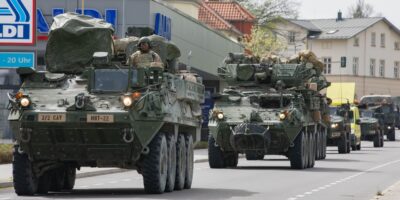
The Stryker family emerged from Army efforts to create rapidly deployable medium-weight forces that could arrive faster than heavy divisions but fight harder than light infantry. Based on the Canadian LAV III, the Stryker carries nine infantry soldiers plus crew in a vehicle that’s theoretically transportable by C-130—though barely, and not with all the armor packages troops actually need.
The Infantry Carrier Vehicle is the baseline variant, with specialized versions including the Mobile Gun System mounting a 105mm cannon, reconnaissance vehicles, mortar carriers, command vehicles, and medical evacuation variants. That’s what makes Stryker Brigades so capable—they combine these variants for genuine combined arms capability without needing heavy tanks.
Strykers served extensively in Iraq, where their speed and reliability proved genuinely valuable for the quick-reaction missions that dominated operations there. The vehicles received various armor upgrades including slat armor against RPGs and add-on packages against IEDs as threats evolved. The platform adapted because it had to.
MRAP: Protection Priority
MRAPs took a fundamentally different approach than either the LAV or Stryker, prioritizing IED protection above everything else. V-shaped hulls designed to deflect blast energy, raised crew compartments that put distance between soldiers and explosions, and heavy armor created vehicles weighing 40,000 pounds or more—triple the Stryker’s weight.
This protection came at serious cost in mobility and transportability. MRAPs couldn’t be airlifted easily, damaged roads and bridges with their sheer weight, and had limited off-road capability that frustrated commanders in certain terrain. But they saved countless lives in Iraq and Afghanistan—that’s not conjecture, we can count the soldiers who walked away from blasts that would have killed them in HMMWVs.
Lessons and Trade-offs
Each vehicle family offers different trade-offs, and there’s no single “best” answer. LAVs maximize mobility and deployability when you need to get forces somewhere fast. Strykers balance protection, firepower, and deployability for sustained operations. MRAPs prioritize crew protection above all else when the threat environment demands it.
The right choice depends entirely on mission requirements. Expeditionary operations favor lighter vehicles that can actually get there. High-threat environments demand MRAP-level protection regardless of the mobility costs. Sustained combined arms operations benefit from Stryker’s balanced capabilities across the spectrum. Modern forces need access to all three approaches because different missions demand different solutions—anyone claiming otherwise doesn’t understand how varied military operations actually are.

Stay in the loop
Get the latest military vehicles vault updates delivered to your inbox.