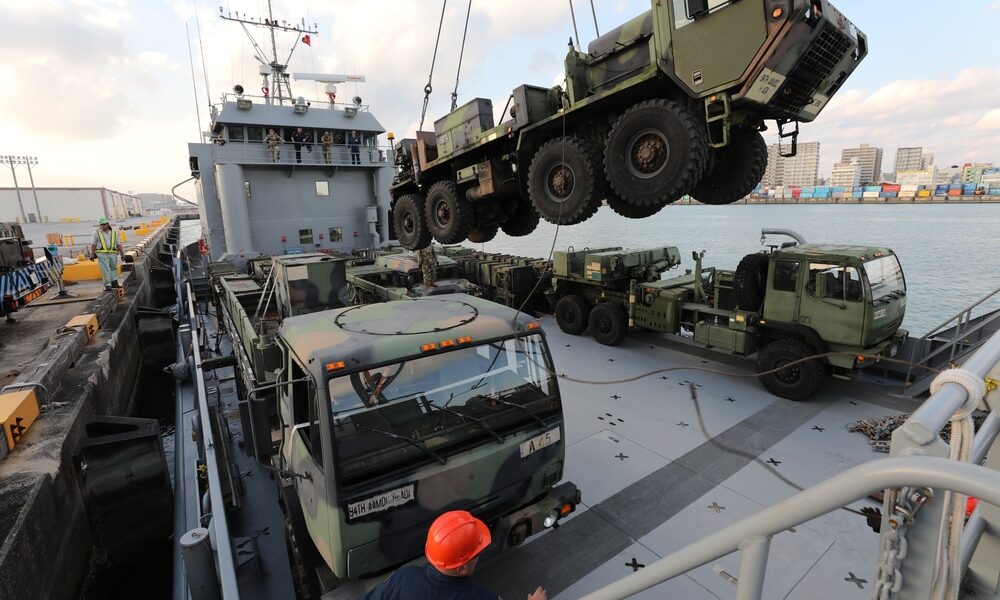
Military truck testing has gotten complicated with all the competing requirements and budget considerations flying around acquisition discussions. As someone who’s spent years following logistics vehicle development and talking to the soldiers who actually drive these things, I learned everything there is to know about why these HEMTT upgrades matter. Today, I will share it all with you.
The National Guard has completed its first comprehensive tactical evaluation of upgraded Heavy Expanded Mobility Tactical Trucks, validating improvements that promise to enhance military logistics capabilities for decades to come. The testing program demonstrated that new powertrain configurations and enhanced cargo systems meet demanding operational requirements across diverse terrain and climate conditions—exactly what you’d want to verify before spending serious money on upgrades.
What is the HEMTT?
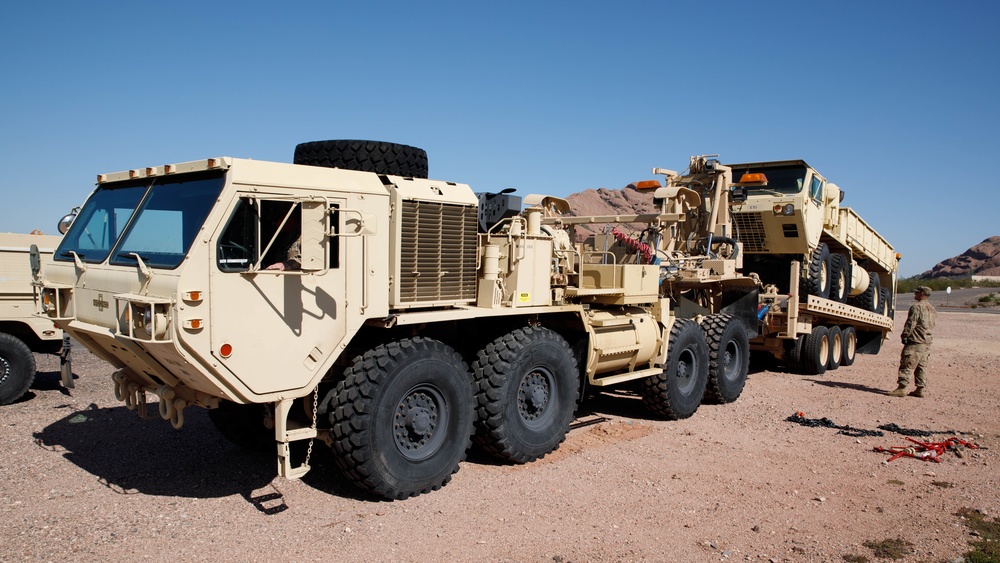
Probably should have led with this section, honestly. The Heavy Expanded Mobility Tactical Truck represents the workhorse of American military logistics—the truck that actually gets supplies where they need to go. Built by Oshkosh Defense in Wisconsin, the HEMTT provides the heavy-lift capability that keeps combat units supplied with fuel, ammunition, equipment, and personnel. The 8×8 all-wheel-drive configuration allows the truck to traverse terrain that would stop conventional commercial vehicles cold, while the 500+ horsepower engine provides the power to haul payloads exceeding 22 tons.
Since entering service in 1982, the HEMTT has proven itself in every major U.S. military operation. Desert Storm saw HEMTT fuel tankers keeping armored divisions moving during the famous “left hook” maneuver across the Saudi-Iraqi border. Operations in Afghanistan and Iraq demonstrated the platform’s durability on rough mountain roads and in extreme temperatures that destroyed lesser trucks. That’s what makes this platform so respected—the HEMTT’s reliability under harsh conditions has earned it the trust of logisticians and combat soldiers alike.
HEMTT Variants and Capabilities
The HEMTT family includes specialized variants designed for specific logistics missions:
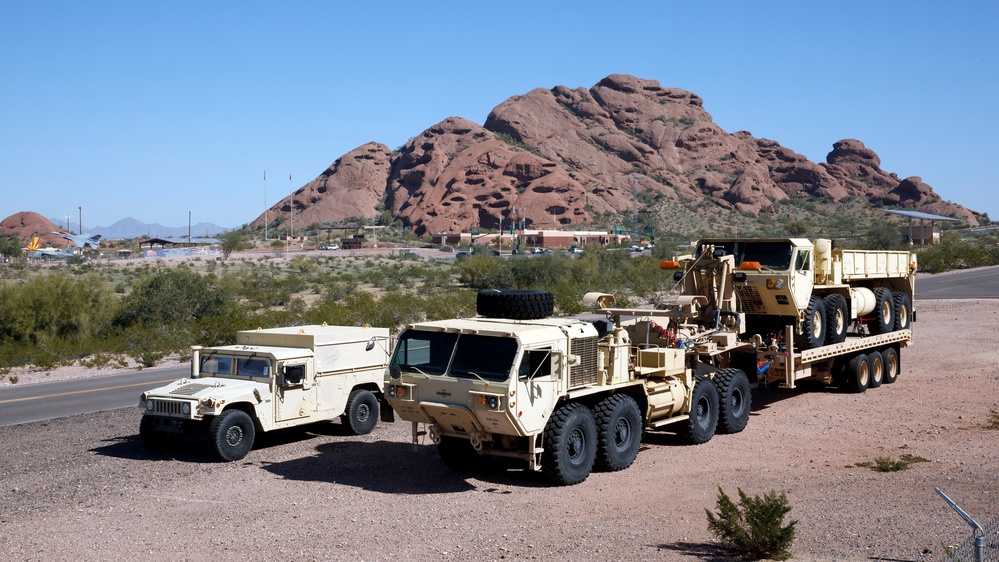
M977 Cargo Truck: The standard flatbed configuration carries palletized cargo, containers, and equipment. The Material Handling Crane variant includes a built-in crane for self-loading operations, reducing dependence on external equipment that might not be available when you need it.
M978 Fuel Tanker: Carrying 2,500 gallons of fuel, these tankers keep combat vehicles, aircraft, and generators operating. Forward support companies rely on M978s to establish fuel points close to front-line units—and I’ve covered these in detail elsewhere on the site.
M983 Tractor: This variant pulls heavy trailers including the M870 tank transporter, which moves M1 Abrams main battle tanks between locations without consuming precious track miles. The tractor also hauls Patriot missile system trailers, making it essential for air defense units.
M984 Wrecker: Recovery operations require serious heavy-lift capability, and the M984 provides exactly that. The truck can recover vehicles weighing up to 25 tons, including disabled HEMTTs themselves—because sometimes your recovery vehicle breaks down too.
M985 Cargo with Crane: This configuration combines the cargo bed with the Material Handling Crane, allowing crews to load ammunition and supplies without external support. When you’re operating at a forward ammunition point, that self-sufficiency matters.
What Upgrades Are Being Tested?
The upgraded HEMTT configuration undergoing National Guard evaluation incorporates several significant improvements that address real problems identified by users. The new Caterpillar C15 engine delivers increased horsepower while meeting current emissions standards, a combination that enhances performance without sacrificing environmental compliance. The Allison 4500SP transmission provides smoother shifting and improved fuel efficiency across the operating envelope.
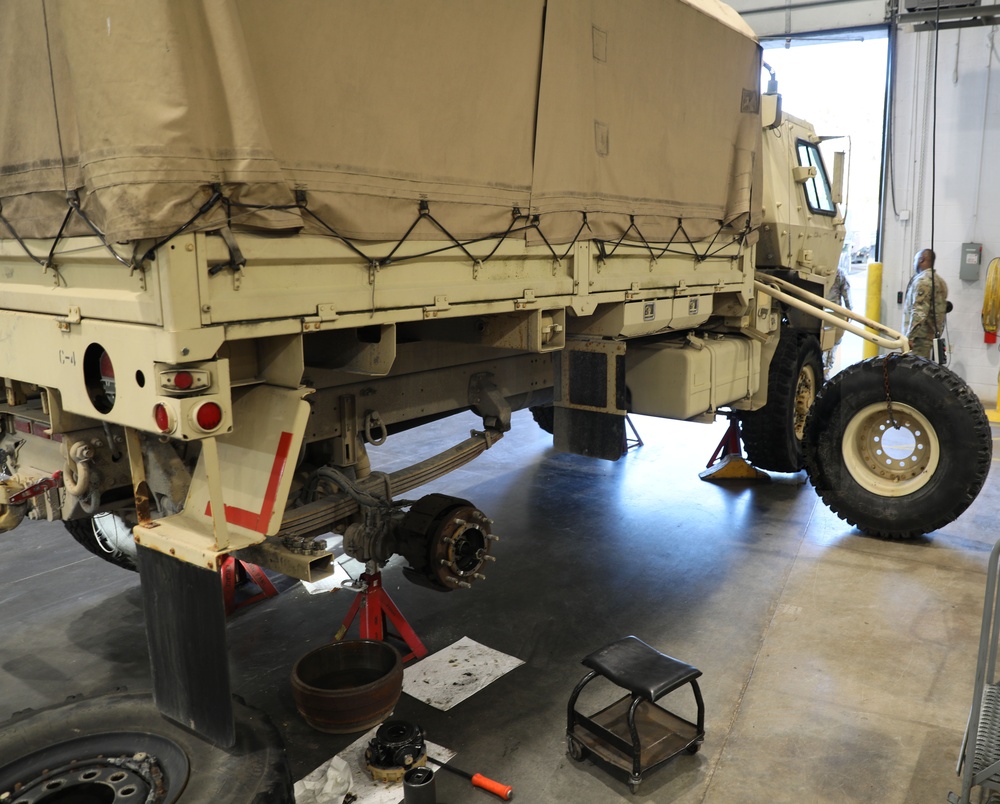
Suspension upgrades include improved shock absorbers and heavier-duty axle components, addressing durability concerns identified during operations in Afghanistan’s mountainous terrain. The upgraded suspension extends vehicle service life and reduces maintenance requirements, translating directly into cost savings and increased availability. When your truck is in the shop, it’s not hauling supplies.
Cab improvements focus on crew comfort and survivability. Add-on armor packages integrate more seamlessly with the redesigned cab structure, and improved climate control systems help crews maintain effectiveness in extreme temperatures—because driving a truck in 120-degree heat while wearing body armor is miserable enough without a broken AC. Digital dashboard displays replace analog gauges, providing drivers with better situational awareness of vehicle status.
Why the National Guard Tests Upgraded Equipment
The National Guard plays a unique role in equipment evaluation because Guard units operate in both military and domestic emergency response scenarios. That’s what makes their feedback so valuable. HEMTT trucks that deploy overseas must also respond to hurricanes, wildfires, and other disasters at home. Guard soldiers operating the trucks bring diverse perspectives from their civilian careers in transportation, maintenance, and logistics—perspectives that full-time military evaluators might miss.
Testing programs typically run 18-24 months and include operations in multiple climate zones. Guard units in Louisiana tested the trucks in hot, humid conditions, while units in Minnesota evaluated cold-weather performance. This comprehensive approach ensures the upgraded configuration meets requirements across the full range of potential operating environments rather than just performing well in controlled conditions.
Oshkosh Defense: Building Military Trucks Since 1917
Oshkosh Defense has manufactured military trucks for over a century, beginning with the company’s first military contract during World War I. The Wisconsin-based manufacturer has built a reputation for engineering vehicles that balance capability, reliability, and maintainability—three things that don’t always go together. Beyond the HEMTT, Oshkosh produces the Family of Medium Tactical Vehicles, the Joint Light Tactical Vehicle, and specialized firefighting apparatus used on military airfields.
The Future of Military Heavy Trucks
Military logistics requirements continue evolving as the Army prepares for potential large-scale combat operations against peer adversaries. Future HEMTT configurations may incorporate hybrid-electric powertrains, providing silent operation for tactical situations and reducing the massive logistics footprint associated with fuel resupply. Autonomous driving capabilities are also under development, potentially allowing convoy operations with reduced crew requirements—though I suspect soldiers will want to maintain manual control options for a long time.
The upgraded HEMTT entering National Guard service today represents an intermediate step toward these future capabilities. By validating improved powertrains and crew interfaces now, the Army establishes the foundation for more advanced systems in subsequent upgrade programs. The truck that moves ammunition to artillery batteries in 2030 will likely share its basic architecture with the vehicles completing evaluation today.
For soldiers who depend on reliable logistics to accomplish their missions, the HEMTT’s continued evolution represents a commitment to maintaining the world’s finest military supply system. Logistics isn’t glamorous, but armies that can’t sustain themselves in the field don’t win wars.



Stay in the loop
Get the latest military vehicles vault updates delivered to your inbox.