The Bradley Fighting Vehicle has gotten complicated with all the variant upgrades, replacement programs that keep failing, and its surprising combat performance flying around. As someone who has studied this vehicle obsessively since the Pentagon Wars days, I learned everything there is to know about the M2 Bradley. Today, I will share it all with you.
At roughly $3.2 million per copy, the Bradley is a serious investment. First fielded in 1981, it has evolved through multiple variants and remains a cornerstone of American mechanized infantry over four decades later. The replacement keeps getting delayed, and the Bradley keeps proving it’s worth keeping around.
Development and History
The Bradley came from the Army’s realization that the M113, while reliable, wasn’t enough for modern mechanized warfare. It needed more firepower and better protection. Development started in the 1960s under various names — XM723, MICV-65, Fighting Vehicle System — before becoming the M2 Bradley, named after General Omar Bradley.
Production kicked off in 1981 at BAE Systems’ York, Pennsylvania plant. Over 6,700 Bradleys have rolled off the line in various configurations. That’s a major fleet of fighting vehicles.
Specifications and Capabilities
Probably should have led with this section, honestly. The Bradley measures 21.5 feet long, 11.8 wide, 9.8 tall. Combat weight ranges from 27 to 33 tons depending on variant. The 600-horsepower Cummins VTA-903T diesel pushes it to 41 mph on roads and 4.5 mph in water — yes, it’s amphibious with preparation.
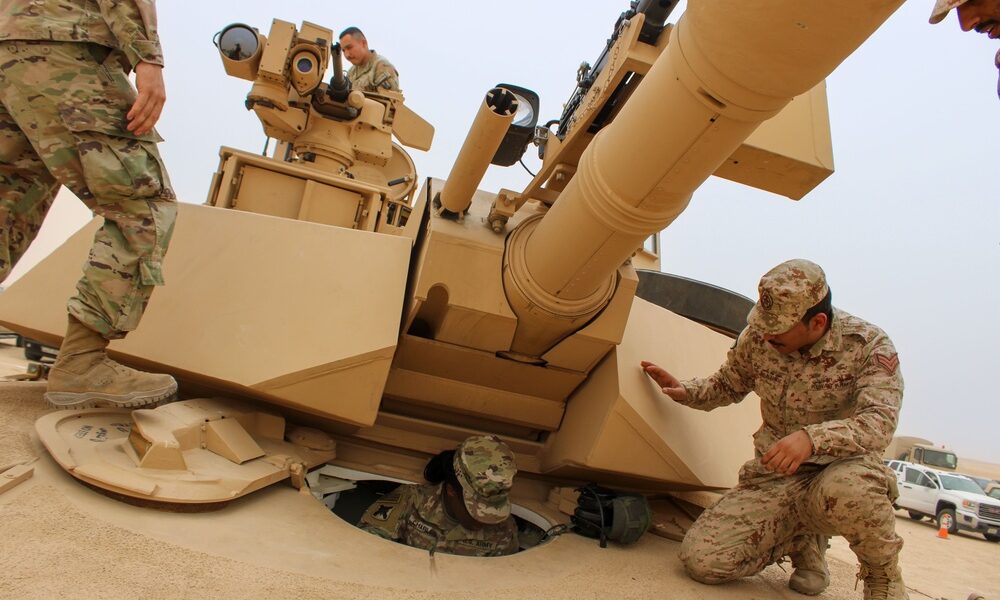
The weapons package is where the Bradley gets serious. The M242 Bushmaster 25mm chain gun fires 200 rounds per minute and reaches out to 2,000 meters against ground targets. The dual TOW launcher kills tanks at ranges up to 3,750 meters. A coaxial M240C 7.62mm adds more firepower. For what started as a personnel carrier, the Bradley brings shocking amounts of lethality.
Armor Protection
Bradley armor has come a long way from the early days. Original models had aluminum with spaced laminate armor. The A3 variant brought explosive reactive armor tiles. The Bradley Urban Survival Kit added reactive tiles, transparent armor gunner’s shield, and improved belly armor for IEDs. Each war taught lessons, and each upgrade reflected them.
Variants
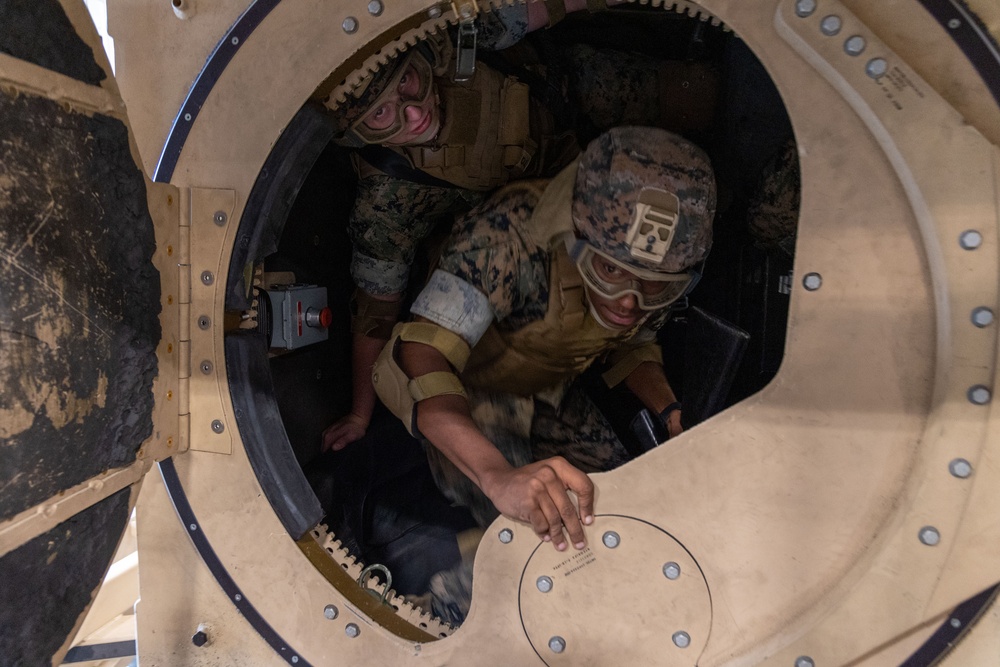
The M2 carries infantry — crew of three plus six dismounts. The M3 Cavalry Fighting Vehicle hauls scouts and extra TOW missiles. Then you get specialized versions: M6 Linebacker for air defense, M7 BFIST for fire support, and the M270 MLRS rocket launcher riding a Bradley chassis. One platform, many missions.
Combat History
That’s what makes the Bradley endearing to us armor enthusiasts — it outperformed everyone’s expectations in combat. During Desert Storm, Bradleys destroyed more Iraqi armored vehicles than M1 Abrams tanks did. More. They were everywhere, aggressive in reconnaissance, and the 25mm gun chewed through Iraqi armor. The TOW missiles handled anything the Bushmaster couldn’t.
In Iraq, the Bradley proved effective in urban combat despite its size. IEDs and RPGs took their toll, driving the armor upgrades. Most recently, the U.S. sent over 300 M2A2 Bradleys to Ukraine, where they’ve seen intense combat against Russian forces. Ukrainian crews love the firepower and survivability, with multiple documented cases of Bradleys eating direct hits from Russian anti-tank missiles and keeping their crews alive.
Future of the Bradley
The Army’s Optionally Manned Fighting Vehicle program is supposed to replace the Bradley eventually. Multiple attempts have been cancelled. Until something actually enters service, Bradley modernization continues with new engines, transmissions, and digital systems. The Bradley’s replacement has been “coming soon” for years. Meanwhile, the Bradley just keeps fighting.

Stay in the loop
Get the latest military vehicles vault updates delivered to your inbox.