The Evolution of Amphibious Military Vehicles: From DUKW to ACV
Amphibious vehicle history has started getting harder to follow with all the failed programs and competing designs flying around defense discussions. As someone who’s spent years studying these unique machines and talking to the Marines who actually operate them, I spent real time learning the ins and outs of how we get troops from ship to shore. Today, I will share it all with you.
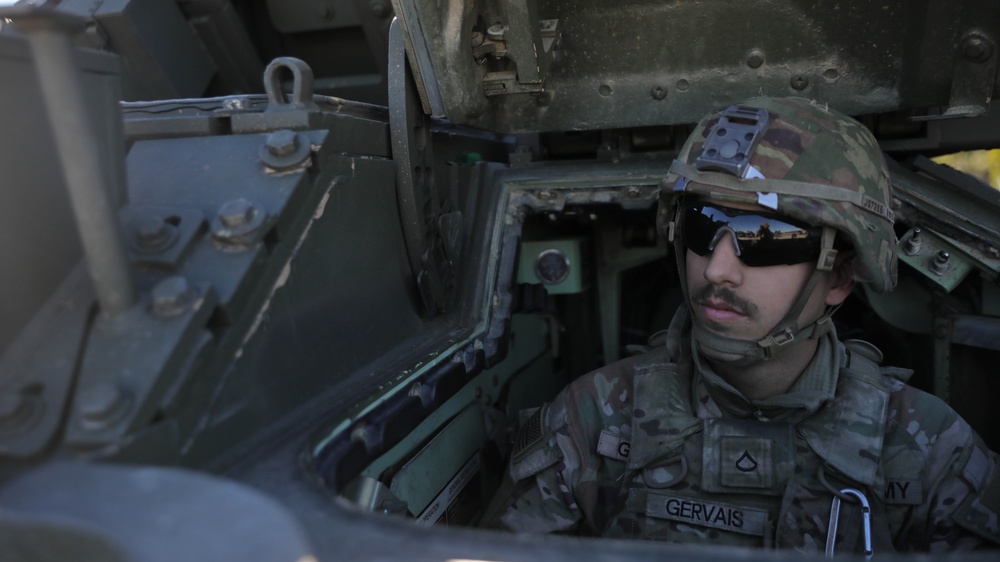
Amphibious military vehicles represent a specialized category of combat equipment designed to traverse both land and water, enabling forces to project power across shorelines without requiring port facilities. From the iconic DUKW of World War II to the modern Amphibious Combat Vehicle, these remarkable machines have evolved dramatically while maintaining their core mission of delivering troops and supplies from sea to shore.
The Birth of Military Amphibians: World War II Origins
Probably should have led in this case, candidly. The need for purpose-built amphibious vehicles became apparent during World War II as Allied forces planned complex over-the-shore assaults in Europe and the Pacific. Traditional landing craft could deliver troops and equipment to the beach, but the transition from watercraft to wheeled or tracked vehicles created delays and vulnerabilities that cost lives—a problem that needed solving fast.
The DUKW, affectionately nicknamed “Duck,” emerged as the solution to this logistical nightmare. Developed by General Motors in 1942, this six-wheeled amphibious truck combined the chassis of the GMC CCKW 2.5-ton truck with a watertight hull and propeller drive. The name DUKW derived from GMC’s internal model designation: D for 1942, U for utility, K for all-wheel drive, and W for dual rear axles. Not exactly catchy, which is why everyone called it the Duck.
DUKWs proved their worth immediately upon entering service. During the 1943 Sicily invasion, they transported supplies directly from ships to inland depots without the beach congestion that plagued earlier amphibious operations. A single DUKW could carry 2.5 tons of cargo or 25 fully equipped soldiers at speeds up to 50 mph on land and 6 knots in water—genuinely impressive capability for the era.
Over 21,000 DUKWs were produced during the war, serving in every theater. Their ability to operate in surf conditions that would swamp conventional boats proved crucial during the Normandy invasion, where they delivered artillery pieces and ammunition directly to advancing units. Here’s something interesting: many DUKWs continue operating as tourist vehicles in coastal cities, testament to their rugged design.
The Landing Vehicle Tracked (LVT), also known as the Amtrac, represented a different approach to amphibious capability. Originally developed for civilian rescue operations in the Florida Everglades—which is a strange origin for a combat vehicle—the tracked design offered superior beach-crossing ability over wheeled vehicles. The Marines adopted the LVT for island-hopping campaigns where coral reefs made conventional landing craft impractical.
Early LVTs were unarmored cargo carriers, dangerously vulnerable to enemy fire during the approach to hostile shores. Combat experience at Tarawa and other Pacific landings drove development of armored variants with mounted weapons. That’s what makes military vehicle development so interesting—lessons written in blood changed these vehicles dramatically. By war’s end, LVTs had evolved from logistics vehicles to assault platforms carrying Marines directly into combat.
Cold War Developments
Post-war amphibious vehicle development diverged between American and Soviet approaches. The United States Marine Corps continued refining the tracked amphibious concept for forcible entry operations, while the Soviet Union developed a family of wheeled and tracked amphibians for crossing European river obstacles—different problems requiring different solutions.
The LVTP-5, entering service in 1956, represented a significant capability increase over World War II-era Amtracs. This aluminum-hulled vehicle carried 34 fully equipped Marines at land speeds of 30 mph and water speeds of 7 knots. The enclosed troop compartment provided protection from small arms fire and artillery fragments, though it remained vulnerable to larger weapons.
Soviet designers produced the BTR-60, an eight-wheeled armored personnel carrier with inherent amphibious capability. Propelled by twin water jets, the BTR-60 could swim calm water at 10 km/h without preparation. This capability aligned with Soviet doctrine emphasizing rapid river crossings during offensive operations in Central Europe—they expected to push west fast.
The PT-76 light amphibious tank gave Soviet forces unique capability for reconnaissance and river assault operations. Armed with a 76mm gun, the PT-76 could engage enemy armor after swimming across water obstacles. No Western nation fielded a comparable vehicle, reflecting different operational priorities and doctrines.
The AAV-7: Workhorse of American Amphibious Operations
The Assault Amphibious Vehicle (AAV-7), originally designated LVTP-7, has served the Marine Corps since 1972, making it one of the longest-serving vehicles in the American military inventory. FMC Corporation developed this aluminum-hulled tracked vehicle to replace the aging LVTP-5 with improved capability and reliability. The fact that it’s still in service over 50 years later says something about both its quality and procurement challenges.
The AAV-7 carries 21 combat-equipped Marines plus a three-person crew. Its 400-horsepower Detroit Diesel engine propels the 26-ton vehicle at 45 mph on land and 8 knots in water using water jets. The vehicle can launch from ship platforms over the horizon and swim to shore independently of landing craft—that independence matters when things go wrong.
Standard armament includes a turret-mounted M2 .50 caliber machine gun and Mk 19 40mm automatic grenade launcher. This combination provides suppressive fire during beach assaults but offers limited capability against armored threats. Reactive armor kits improve protection in combat zones where the threat environment demands it.

The vehicle’s suspension system allows it to navigate rough terrain common to beach environments, including sand, coral, and debris. Track width distributes weight effectively, preventing the bogging that plagued earlier designs in soft ground conditions—getting stuck on a beach under fire is not where you want to be.
Numerous upgrades have extended AAV-7 service life far beyond original projections. The Reliability, Availability, and Maintainability/Rebuild to Standard program refurbished the fleet in the 1980s. Subsequent programs have added improved powertrains, fire suppression systems, and enhanced armor packages. The vehicle keeps getting better because it has to.
Combat experience in Iraq revealed vulnerabilities to improvised explosive devices and underbody attacks. Several incidents resulted in Marine casualties, prompting criticism of continued reliance on the aging platform. Enhanced underbody armor kits addressed some concerns, but the fundamental design limitations remain—you can only upgrade an old vehicle so much.
The Expeditionary Fighting Vehicle Program
The Expeditionary Fighting Vehicle program aimed to revolutionize amphibious assault with a vehicle capable of launching from ships 25 miles offshore and racing to shore at speeds approaching 30 knots. This over-the-horizon capability would allow assault ships to remain beyond the range of coastal anti-ship missiles, addressing a growing threat to amphibious operations that keeps planners up at night.
General Dynamics developed the EFV around a planing hull that rose out of the water at speed, dramatically reducing drag. The 30-ton vehicle carried 17 Marines at high water speeds impossible for conventional amphibians. On land, the EFV matched M1 Abrams acceleration with a 2,700-horsepower engine. On paper, it was everything the Marines wanted.
Armament included a 30mm Mk 44 Bushmaster II cannon and 7.62mm machine gun in a stabilized turret. Fire control systems incorporated thermal imaging and laser rangefinding for accurate engagement of targets during both water and land phases of an assault.
However—and this is a significant however—the program encountered persistent technical difficulties and cost overruns. The complex planing hull mechanism proved unreliable in testing. Operating the 2,700-horsepower engine in saltwater environments created maintenance challenges that nobody had fully anticipated. Unit costs spiraled from an initial estimate of $8 million to over $24 million per vehicle.
Secretary of Defense Robert Gates cancelled the EFV program in 2011 after expenditures exceeding $3 billion had produced only seven test vehicles. The Marine Corps was forced to extend AAV-7 service life while pursuing a more modest replacement program. That’s what makes this story so frustrating for anyone who followed it—billions spent with nothing to show for it.
The Amphibious Combat Vehicle: A New Generation
The Amphibious Combat Vehicle program emerged from the EFV cancellation with more modest but achievable requirements. Rather than seeking revolutionary high-speed water capability, the ACV prioritizes protection, reliability, and commonality with existing Marine Corps logistics systems—a pragmatic approach after the EFV debacle.
BAE Systems won the ACV contract with a design derived from their Italian-developed Iveco SuperAV. This eight-wheeled vehicle carries 13 Marines plus a three-person crew in a V-shaped hull that provides enhanced mine and IED protection. Water propulsion comes from twin screw propellers rather than the water jets used on the AAV-7.
The ACV entered Marine Corps service in 2020, initially complementing rather than replacing the AAV-7 fleet. Water speed of approximately 6 knots falls short of the cancelled EFV but exceeds the AAV-7’s capability. Land speed reaches 65 mph, significantly faster than the older tracked vehicle.
Protection levels far exceed the AAV-7’s aluminum construction. That’s what makes this vehicle worth the investment. The ACV’s steel hull and V-shaped bottom direct blast energy away from the crew compartment. Spall liners and energy-absorbing seats further improve survivability. Marines report significantly better riding quality compared to the harsh tracked suspension of the AAV-7—comfort matters when you’re spending hours in the vehicle.
A command variant and recovery variant have entered development alongside the personnel carrier. The Marine Corps plans to procure over 200 ACVs in multiple configurations, eventually replacing the AAV-7 fleet entirely.
Future ACV variants will incorporate an unmanned turret with a 30mm cannon, providing direct fire capability absent from the initial troop carrier version. This ACV-30 variant will give Marine infantry units embedded fire support without requiring separate armored vehicle support—a significant capability improvement.
Modern Russian Amphibious Vehicles
Russia continues developing amphibious armored vehicles for both domestic forces and export, following a doctrine that values these capabilities highly. The BTR-80 and its successor BTR-82A remain in widespread service, offering wheeled amphibious capability for motorized rifle units. These vehicles can swim at approximately 10 km/h using water jets, crossing rivers and lakes without bridging support.
The BMD series of airborne combat vehicles combines air-droppability with amphibious capability, giving Russian airborne forces unique flexibility. The current BMD-4M mounts a 100mm gun and 30mm autocannon on a platform light enough for parachute delivery yet capable of swimming water obstacles. Few Western vehicles attempt this combination of requirements—it’s a distinctly Russian approach.
The 2S25 Sprut-SD provides Russian naval infantry with a full-sized 125mm tank gun on an amphibious chassis. This light tank can swim to shore and immediately engage enemy armor with the same weapon carried by T-72 and T-90 main battle tanks. The combination of amphibious capability and heavy firepower is unique to Russian doctrine and gives them options we lack.
Chinese Amphibious Development
The People’s Liberation Army Navy has invested heavily in amphibious capability as potential Taiwan scenarios require over-water power projection. The ZBD-05 infantry fighting vehicle represents current Chinese amphibious technology, combining tracked mobility with high water speed capability that American designers gave up on.
Like the cancelled American EFV, the ZBD-05 uses a planing hull to achieve water speeds reportedly exceeding 20 km/h. Chinese engineers apparently solved the technical challenges that defeated the American program, though reliability in extended operations remains unproven. The vehicle mounts a 30mm cannon and anti-tank missiles for combat operations—serious firepower for an amphibian.
The ZTD-05 assault gun variant carries a 105mm cannon on the same chassis, providing direct fire support for amphibious landings. This capability mirrors Russian amphibious tank concepts and addresses a gap in American amphibious force structure that we haven’t filled.
China continues developing these capabilities as part of broader military modernization efforts focused on potential operations in the Western Pacific. Any Taiwan contingency would require massive amphibious lift capacity and vehicles capable of fighting through defended beaches—they’re clearly preparing for that possibility.
The Future of Amphibious Warfare
Amphibious vehicles face evolving challenges from precision-guided anti-ship missiles, unmanned systems, and advanced sensors that make traditional ship-to-shore movements increasingly hazardous. Future amphibious operations may look very different from the World War II-style mass landings that shaped current vehicle designs—the days of Normandy-style assaults may be over.
Distributed operations concepts envision small groups of Marines landing at multiple points rather than concentrated beach assaults. This approach requires vehicles capable of independent navigation and communication over extended distances. The ACV’s improved electronics suite supports these concepts in ways the AAV-7 couldn’t.
Unmanned amphibious vehicles could scout landing zones, deliver supplies, or provide decoys for defended beaches. Several nations are exploring autonomous platforms that could accompany manned vehicles or operate independently. These developments could fundamentally change the role of traditional crewed amphibious vehicles—though I suspect manned vehicles will remain important for a long time.
Electric and hybrid propulsion may improve underwater acoustic signature, making detection more difficult. Silent approach could prove decisive in contested environments where acoustic sensors provide early warning. Several experimental programs are exploring these technologies, though fielding remains years away.
Conclusion
From the humble DUKW carrying supplies across Normandy beaches to the modern ACV delivering Marines into contested environments, amphibious vehicles have continuously evolved to meet changing requirements. These specialized platforms enable operations impossible with conventional vehicles, projecting military power across the water-land interface that defines so much of the world’s strategic geography.
Current programs balance capability aspirations against technical risk and budget realities. The ACV represents a pragmatic approach after the EFV’s ambitious failure, prioritizing survivability and reliability over revolutionary speed. Future developments will address emerging threats while maintaining the fundamental capability that amphibious vehicles provide: delivering combat power from sea to shore.
Training and Crew Requirements
Operating amphibious vehicles requires specialized training beyond standard armored vehicle qualification—you’re asking crews to master two completely different environments. Crews must master both land vehicle operation and waterborne navigation, understanding the unique challenges each presents. Marine Corps AAV crews undergo extensive training at Camp Pendleton and other facilities before joining operational units.
Water operations training emphasizes surf zone navigation, the most dangerous phase of amphibious movement. Breaking waves can swamp vehicles or throw them off course, while underwater obstacles invisible from the surface pose constant threats. Crews learn to read wave patterns and time their movements to minimize exposure during the critical transition from water to land—it’s as much art as science.
Night amphibious operations present additional challenges that require extensive practice. Limited visibility complicates navigation and obstacle avoidance. Thermal imaging helps detect other vehicles and obstacles, but water’s thermal characteristics differ significantly from land, requiring adapted techniques. Training programs include extensive night operations to build crew proficiency before they do it for real.
Maintenance of amphibious vehicles demands attention to both conventional powertrain components and specialized marine systems that other armored vehicles don’t have. Salt water corrosion affects every metal surface, requiring thorough freshwater washing after each water operation. Hull integrity inspections check for damage that could cause flooding during subsequent waterborne operations. Propulsion system maintenance includes impeller inspection and water jet servicing—it’s more work than maintaining a conventional track vehicle.
Comparative Analysis: Tracked vs. Wheeled Amphibians
The choice between tracked and wheeled amphibious vehicles involves trade-offs that different nations resolve differently based on their operational requirements. Tracked vehicles generally offer superior off-road mobility and can negotiate obstacles that would stop wheeled platforms cold. The AAV-7’s tracked design excels in beach exits where sand and obstacles challenge wheeled vehicles trying to gain traction.
Wheeled amphibians provide higher road speeds, reduced maintenance requirements, and often better fuel economy. The ACV’s eight-wheel configuration offers respectable off-road mobility while excelling on improved surfaces. Strategic mobility benefits from wheeled vehicles’ lower weight and smaller logistics footprint—getting them where you need them is easier.
Water performance depends more on hull design and propulsion systems than running gear type. Both tracked and wheeled vehicles can achieve similar water speeds with appropriate engineering. The cancelled EFV demonstrated that high-speed water capability requires planing hull designs regardless of land propulsion system.
Most Western nations have favored tracked amphibians for assault roles, reserving wheeled platforms for logistics and light forces. Russia and China employ both types, matching vehicle characteristics to specific unit requirements. This mixed approach provides flexibility but complicates logistics and training—everything’s a trade-off.
Future designs may blend characteristics through innovative approaches. Amphibious vehicles with retractable wheels and auxiliary tracks could optimize performance for each environment. Electric hub motors in each wheel could provide the controllability of tracked vehicles with wheeled efficiency. These technologies remain developmental but suggest possible evolutionary paths for future platforms.
Logistical Support for Amphibious Operations
Amphibious vehicles require specialized support infrastructure that extends from manufacturing through operational deployment. The unique demands of saltwater operations, beach recovery, and over-the-horizon launch create logistical challenges absent from conventional armored vehicle operations—you can’t support these vehicles the same way you support tanks.
Shipboard operations impose constraints on vehicle size, weight, and maintenance accessibility. Amphibious assault ships like the America class carry dozens of AAVs in well decks designed specifically for their dimensions. Launch and recovery operations require precise ship handling and vehicle positioning, practiced extensively before deployment.
Beach recovery assets must accompany amphibious landings to retrieve stuck or damaged vehicles. The AAV-7 recovery variant carries winches and towing equipment for extracting vehicles from sand or obstacles. Without rapid recovery capability, disabled vehicles can block beach exits and delay entire assault waves—a single stuck vehicle can cause a traffic jam under fire.
Spare parts inventory for amphibious vehicles includes marine-specific components unavailable through standard military supply channels. Propeller assemblies, hull patch materials, and water jet components require specialized sourcing. Units plan deployments around anticipated material requirements, sometimes pre-positioning supplies aboard support vessels.
The transition from AAV-7 to ACV introduces temporary logistics complexity as both platforms operate simultaneously. Different powertrains, running gear, and weapon systems require parallel supply chains. Training programs must cover both vehicles until AAV-7 retirement completes. This transition period tests Marine Corps logistics capabilities, but it’s a necessary step toward fielding a more capable force.

Stay in the loop
Get the latest military vehicles vault updates delivered to your inbox.