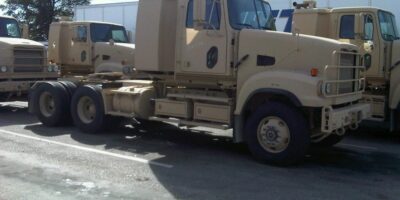
M939 5-ton trucks have gotten complicated with all the variant designations and production years flying around. As someone who has spent more weekends than I care to admit at surplus auctions and underneath the hood of these beasts, I learned everything there is to know about the 5-ton platform. Today, I will share it all with you.
Here’s the deal. The M939 series is one of the last military trucks you can buy that doesn’t need a computer science degree to fix. No emissions controls. No electronic fuel injection. Just a Cummins diesel, an Allison automatic, and enough torque to pull a house off its foundation. I might be exaggerating. Slightly.
Understanding the 5-Ton Designation
First thing that confuses people — “5-ton” is the payload rating, not what the truck weighs. A fully loaded M939 hits nearly 30,000 pounds. The 5-ton number (10,000 pounds of cargo) is what the truck carries safely across rough terrain while still performing like it should.
This rating system goes back to World War II. The 5-ton class sat between lighter 2.5-ton trucks and the heavy tractor-trailers. It was the Goldilocks zone — enough cargo capacity to be useful, small enough to actually get where you needed it to go.
Development History
AM General built the M939 series in the early 1980s as an upgrade over the older M809 trucks. The Army wanted better performance, more parts commonality, and improved reliability. The M939 delivered on all three, and it did it while keeping the basic layout soldiers already knew.
Production ran from 1982 through 1999. Seventeen years. The Army kept ordering them because they worked. That’s the highest compliment an acquisition program can get.
The truck went through several sub-variants over its life:
- M939: The original production run
- M939A1: Updated engine and transmission, better reliability across the board
- M939A2: Final production variant with additional refinements
Technical Specifications
Probably should have led with this section, honestly. The numbers tell the story of a truck designed to be useful, not flashy:
- Configuration: 6×6 — all six wheels drive, all the time
- Engine: Cummins NHC-250 diesel, 240 horsepower
- Transmission: Allison MT654CR automatic, 5-speed
- Transfer Case: Two-speed with high and low range
- Payload Capacity: 10,000 pounds cross-country
- Towing Capacity: 15,000 pounds
- Gross Vehicle Weight: 29,000 pounds
- Maximum Speed: 55 mph
- Range: 400+ miles
- Fuel Capacity: 76 gallons
- Fording Depth: 30 inches without prep
The Cummins diesel deserves its own spotlight. This engine shows up in countless civilian applications, which means parts are everywhere. The mechanical fuel injection avoids all the electronic nonsense, so you can diagnose and fix problems in the field with hand tools and some common sense. I’ve done it. It’s satisfying in a way modern vehicles never allow.
The Allison automatic is the same story — proven, reliable, and available. Automatic operation means less driver fatigue during long convoys, and the transmission’s reputation for durability is well-earned.
Major Variants
The M939 family includes a bunch of body configurations, all riding on the same common chassis. That parts commonality is a big deal for owners.
M923 Cargo Truck
Your bread-and-butter cargo hauler. Fourteen-foot steel bed with removable side stakes and a canvas cover. Bench seats along the sides for troop transport if needed. Tie-downs everywhere for securing whatever you’re hauling.
M925 Cargo with Winch
Same truck as the M923, but with a 20,000-pound front-mounted winch. Self-recovery is worth its weight in gold when you’re stuck at 2 AM on a muddy trail with nobody around for miles. Ask me how I know.
M927 XLWB Cargo
Extended Long Wheel Base stretches the cargo bed to 20 feet. Handles oversized loads and standard shipping containers. If you need to haul big stuff, this is your truck.
M931 Tractor
Swap the cargo bed for a fifth wheel and now you’re pulling semi-trailers. Fuel tankers, equipment haulers, you name it. The 6×6 drivetrain gives this tractor off-road chops that civilian semis can only dream about.
M934 Expansible Van
Mobile command posts, maintenance shops, comms centers — the expandable shelter body opens up to give you extra interior space when parked. Pretty clever design, honestly.
M936 Medium Wrecker
The recovery specialist. Crane and winches for righting overturned vehicles, pulling trucks out of ditches, and handling field repairs that would otherwise need a tow to the shop.
Operational History
The M939 showed up everywhere the American military went from the 1980s forward. During Desert Storm, thousands of 5-tons hauled supplies across Saudi Arabia and into Iraq and Kuwait. The trucks just kept running despite conditions that murdered more sophisticated vehicles.
Somalia, Bosnia, Kosovo, and a dozen smaller deployments in between — the M939 did the unglamorous but essential work of moving stuff from point A to point B. Drivers liked them because they were predictable. You knew what the truck would do, and it did it every time.
Iraqi Freedom and Enduring Freedom were the 5-ton’s last major combat tours. By then the trucks were aging out, and the Army started replacing them with newer MTV series trucks. A lot of M939s finished their careers with Guard and Reserve units before hitting the surplus market.
Why the M939 Works for Civilians
That’s what makes the M939 endearing to us military vehicle collectors — it’s the rare military truck you can actually use every day if you want to.
Simplicity
Zero computers. Zero emissions controls. Zero complicated electronics. The whole truck runs on mechanical systems. A decent shade-tree mechanic can handle most problems with basic tools. I’ve fixed mine in a Walmart parking lot. Not my proudest moment, but it got done.
Parts Availability
Cummins engine parts are at your local truck shop. Allison transmission components too. Rockwell axles appear in a million civilian applications. Even the military-specific body parts are available through surplus channels and aftermarket suppliers.
Reasonable Size
It’s big, don’t get me wrong. But it’s manageable. Fits in most commercial parking spots. Doesn’t need special infrastructure for storage. Plenty of owners keep theirs at home without any drama from the neighbors. Well, minimal drama.
Legal Operation
Most M939s can run on a standard Class A CDL. No special permits for normal road travel. Registration and insurance cost more than your Honda Civic, obviously, but it’s reasonable for what you’re getting.
Practical Utility
Five tons of cargo capacity is genuinely useful. I’ve hauled equipment, building supplies for a remote property, and loads that would’ve snapped the frame on a pickup truck. The all-wheel-drive handles conditions that stop everything else on the road.
Buying a Surplus M939
The surplus market has a steady supply. Prices vary, but here’s what you should know before you pull the trigger.
Condition Assessment
These trucks range from “barely driven, garage kept” to “driven through hell, maintained never.” Big spread. You need to inspect before buying or you’re gambling.
Key areas to check:
- Engine compression and oil pressure — the basics
- Transmission shift quality — hesitation is a red flag
- Transfer case operation in all ranges
- Differentials — listen for whining or grinding
- Brake system function and air system integrity
- Frame condition and rust — the big-ticket item
- Cab rust, especially floors and door frames
- Tire condition and date codes — old rubber is dangerous rubber
Pricing
Running, operational M939s go for $5,000 to $25,000 depending on variant and condition. Wreckers command premiums because they’re useful even beyond the military vehicle hobby. Low-mileage examples or recently rebuilt trucks can push higher.
Project trucks — the ones that need real work — sell for $2,000 to $5,000. Viable if you know what you’re doing, but parts and labor can eat that savings quickly if you don’t.
Sources
M939s pop up through several channels:
- Government Surplus: GovPlanet, IronPlanet, and direct DLA sales
- Private Sales: Military vehicle forums, Facebook groups, classifieds
- Dealers: Specialty military vehicle dealers who maintain inventory and arrange shipping
Common Modifications
Most civilian owners modify their M939s for comfort and capability. The military wasn’t exactly focused on creature comforts.
Power Steering: The original manual steering will build forearms like Popeye. Aftermarket power steering makes daily driving actually enjoyable.
Heater/AC: Factory heating is barely adequate. AC doesn’t exist. Aftermarket climate control turns the cab from miserable to livable.
Seats: Military seats were designed by someone who hates backs. Air-ride seats from commercial trucks are the single best upgrade you can make for long drives.
Lighting: LEDs improve visibility and reduce electrical load. Easy swap, big improvement.
Bed Modifications: Stake bodies, flatbeds, dump bodies, custom boxes — owners configure the bed for whatever they actually need to do.
Living with a 5-Ton
Before you hand over the cash, understand what you’re signing up for:
Fuel Economy: Six to ten miles per gallon. The 76-gallon tank gives decent range, but filling it at today’s diesel prices will test your commitment.
Speed: Governed to 55 mph. Highway trips require patience and a willingness to get passed by everyone including grandma in her Buick.
Maneuverability: Long hood, wide turning radius. Parking lots become an adventure. Plan ahead.
Noise: Loud. Really loud. The cab has zero sound insulation worth mentioning. Earplugs or a good headset for long trips. Your hearing will thank you.
Maintenance: Simpler than modern vehicles, yes. But not maintenance-free. Annual brake checks, fluid changes, and general inspections are non-negotiable if you want reliability.
The Bottom Line
The M939 5-ton is military vehicle ownership at its most practical. Real capability, reasonable costs, and the satisfaction of owning something with genuine military heritage that you can actually put to work. The emphasis on simplicity means you maintain it yourself without needing a dealer or a diagnostic laptop.
For anyone who wants a military truck they’ll actually drive instead of just stare at, the M939 deserves a hard look. Thousands of them are out there in civilian hands, backed by an active community that shares knowledge and parts sources freely. Whether you need serious hauling power, unstoppable off-road capability, or you just want to feel like a badass rolling down the highway — the 5-ton delivers.



Stay in the loop
Get the latest military vehicles vault updates delivered to your inbox.